How to Date Umbro Shirts (1980-2010)
Definitive guide to dating vintage Umbro football shirts. Logo evolution, label changes, and decade-by-decade identification methods.
Table of Contents
Dating vintage Umbro football shirts accurately is essential for collectors and buyers. Unlike modern kits with clear product codes, vintage Umbro pieces require careful examination of logos, labels, and construction details.
This guide covers four key dating eras from 1980-2010, giving you the tools to pinpoint when a shirt was manufactured.
Quick Dating Flowchart
Use this decision tree for rapid era identification:
| Check This First | Points To |
|---|---|
| Lowercase “umbro” wordmark + sharp diamond corners | 1980s |
| UPPERCASE “UMBRO” + blue neck label with DOTS | 1990s |
| Slim letters + multi-language polyester tags | 2000s |
| No wordmark + Nike-style labeling | 2008-2012 |
1. The 1980s Era (1980-1989)
The 1980s represent Umbro’s classic era—heavy cotton, simple labeling, and distinctive logo features.
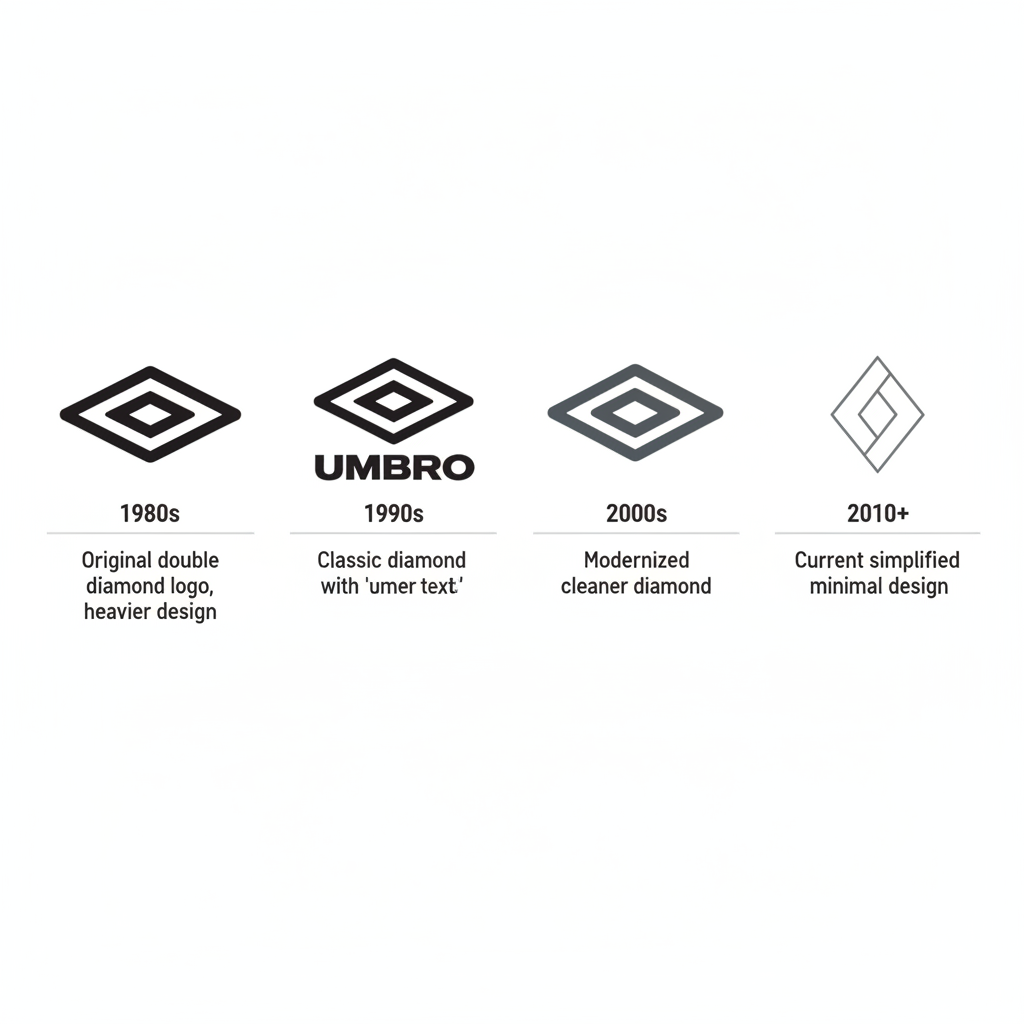
Logo Characteristics
- Lowercase “umbro” wordmark beneath double-diamond
- Thick, closely arranged characters
- Sharp pointed diamond corners (not rounded)
- Logo often embroidered rather than printed
Label Features
- Simple single-language tags
- Basic size and care information
- “Made in England” or “Made in Scotland” common
- No product codes on most pieces
Fabric & Construction
- Heavy cotton or cotton/polyester blends
- Substantial weight (feels heavier than modern kits)
- Diamond taping pattern on sleeves and shorts
1980s Quick Check
If the shirt has lowercase “umbro” lettering AND feels heavy like cotton, you’re likely looking at a genuine 1980s piece.
2. The 1990s Era (1990-1999)
The 1990s brought significant changes to Umbro’s branding and labeling—and introduced the infamous Dots Test.
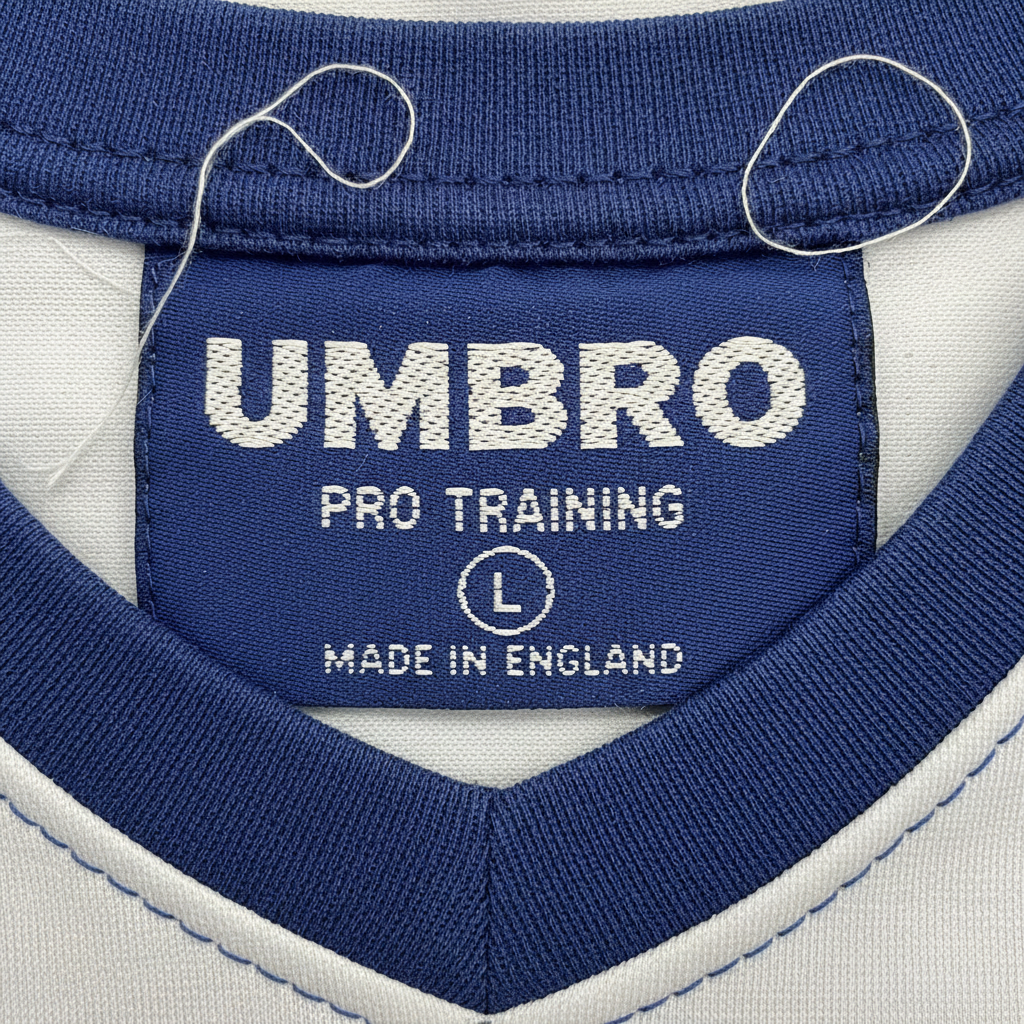
Logo Evolution (1990-1999)
| Period | Changes |
|---|---|
| 1990-1992 | Wordmark becomes UPPERCASE and wider |
| Mid-1990s | Blocky, bold “UMBRO” text |
| Late 1990s | Letters and diamonds become slimmer |
The Dots Test (Critical!)
🔍 The Most Reliable 1990s Dating Method
Authentic 1990s Umbro neck labels have tiny dots within the letters of “UMBRO”.
- Authentic: Clear, distinct dots visible in each letter
- Fake/Wrong Era: Flat, smooth letters with no dots
This detail is extremely difficult for counterfeiters to replicate. If you see a blue 1990s-style label with NO dots in the text, the shirt is likely fake or from a different era.
Label Features
- Blue neck labels (often with white size label underneath)
- Dots within “UMBRO” lettering
- “Made in England” or “Made in Portugal” common
- Mid-1990s: Morocco manufacturing begins
Pro Training Designation
The “Pro Training” line was Umbro’s premium player-spec range:
- Heavier construction
- Embroidered badges
- Made for professional use
- Commands higher prices today
Iconic 1990s Dating Example
England Euro 96 Home Shirt:
- Blue neck label with DOTS in UMBRO
- “Made in England” care label
- Pro Training designation
- Heavy cotton-blend fabric
- UPPERCASE blocky lettering on logo
3. The 2000s Era (2000-2007)
The 2000s brought modernization with slimmer designs and standardized labeling.
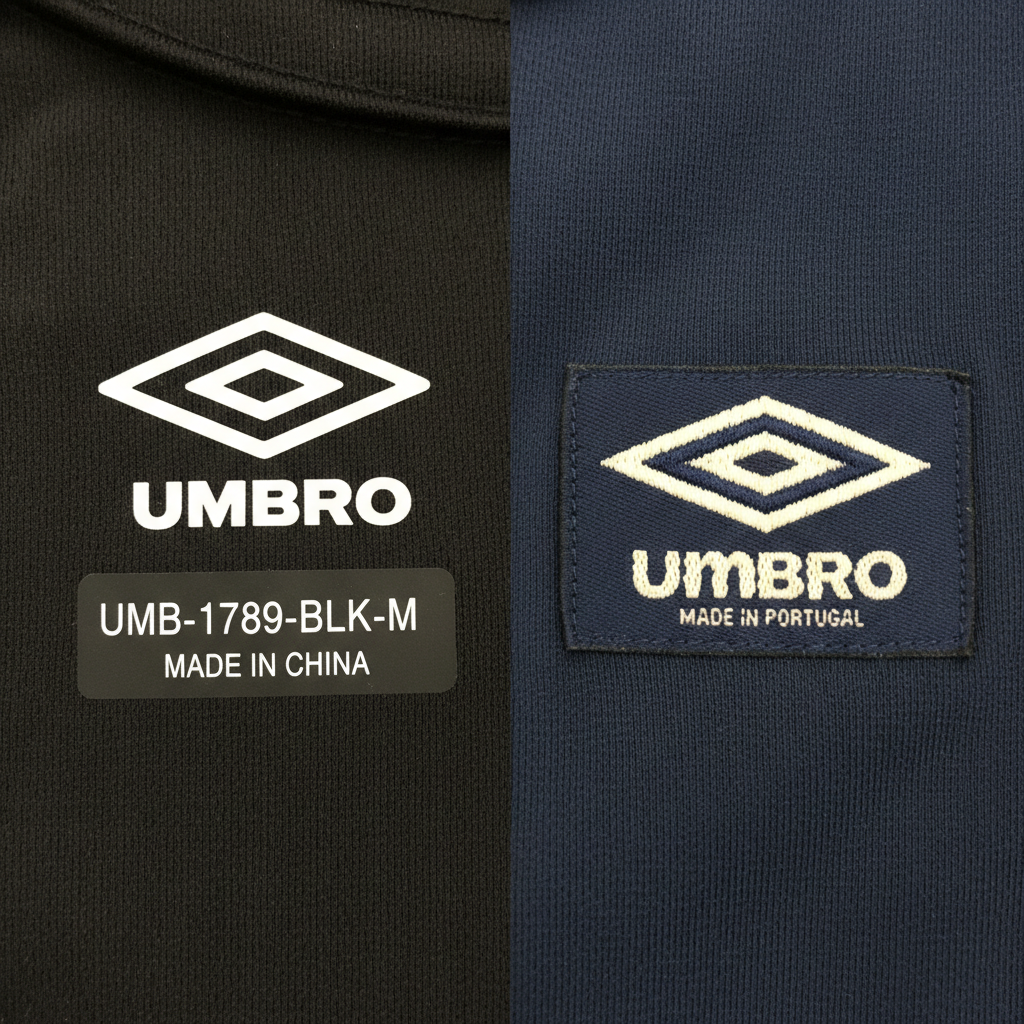
Logo Characteristics
- Diamond becomes horizontally elongated
- Upper vertices curve toward center
- Softer, more rounded corners (vs. sharp 1980s corners)
- Letters become lighter and thinner
- Wordmark sometimes less legible due to thin font
Label Features
- Large, shiny polyester wash tags replace smaller cotton labels
- Multi-language care instructions
- China, Indonesia, Thailand manufacturing predominant
- Product codes begin appearing consistently
Key Visual Markers
| Feature | 1990s | 2000s |
|---|---|---|
| Diamond corners | Sharp | Rounded/soft |
| UMBRO letters | Thick, blocky | Thin, slim |
| Wash label | Small, 1-2 languages | Large, multi-language |
| Manufacturing | UK/Portugal/Morocco | Asia (China, Thailand) |
Manufacturing Country Dating
A shirt claimed to be from 1990 but with a “Made in China” label is almost certainly misdated or fake. China manufacturing became common only in the 2000s.
4. The Nike Era (2008-2012)
Nike acquired Umbro in 2008, bringing significant changes to production and labeling.
Distinctive Features
- Wordmark removed from logo (just double-diamond)
- Diamond extended to near-original proportions
- Edges remain softened and rounded (not sharp like 1980s)
- Nike-style labeling and manufacturing standards
- Made in Nike factories (same countries as Nike production)
Nike Era Authenticity
Nike-style labels on Umbro kits from 2008-2012 are completely authentic. Nike owned Umbro during this period, so the manufacturing standards reflected Nike’s processes.
Post-2012 (Iconix Era)
After Nike sold Umbro to Iconix in 2012:
- Wordmark returns (lowercase, slim font similar to 1980s)
- Heritage focus with nostalgic designs
- Modern manufacturing continues (Asia-based)
5. Key Sponsorship Dates for Context
Use these historical markers to verify dating claims:
| Year | Event |
|---|---|
| 1954-2022 | England national team (longest partnership in football) |
| 1974 | Double-diamond logo introduced |
| 1990 | England World Cup (Gazza’s tears) |
| 1996 | England Euro ‘96 (home tournament, iconic home shirt) |
| 2008 | Nike acquires Umbro |
| 2012 | Iconix acquires Umbro |
Dating by Event
If someone claims an “England Euro 96” shirt, check that all era markers match: UPPERCASE logo, blue label with dots, Made in England, heavy cotton blend. Any mismatch indicates a fake or incorrect attribution.
Summary: Era Identification at a Glance
| Era | Logo | Label | Manufacturing | Key Tell |
|---|---|---|---|---|
| 1980s | lowercase, sharp corners | Simple, single-language | UK | Heavy cotton feel |
| 1990s | UPPERCASE, blocky | Blue with DOTS | UK/Portugal | Dots in UMBRO letters |
| 2000s | Slim, curved corners | Polyester, multi-language | Asia | Large shiny tags |
| 2008-12 | No wordmark | Nike-style | Nike factories | Nike manufacturing marks |
Frequently Asked Questions
How do I quickly identify a 1990s Umbro shirt?
Look for three key indicators: UPPERCASE 'UMBRO' logo, blue neck label with tiny dots within the letters, and 'Made in England' or 'Made in Portugal' manufacturing. The dots test is the most reliable method.
What is the Umbro 'Dots Test'?
Authentic 1990s Umbro neck labels have tiny dots within each letter of 'UMBRO'. Labels without dots are either fake or from a different era. This detail is extremely difficult for counterfeiters to replicate.
When did Umbro change from lowercase to UPPERCASE logo?
Around 1990-1992, Umbro changed from lowercase 'umbro' to UPPERCASE 'UMBRO'. The wordmark became wider and blockier during the early 1990s, then slimmer toward the late 1990s.
How can I tell if a 'Made in China' Umbro is fake?
Check the era it claims to be from. China manufacturing became common only in the 2000s. A shirt claiming to be from 1990 or earlier with 'Made in China' is almost certainly misdated or fake.
What happened during the Nike ownership period (2008-2012)?
Nike removed the UMBRO wordmark (leaving just the double-diamond), used Nike-style labeling, and manufactured in Nike factories. These characteristics are authentic for that period.
Are Pro Training Umbro shirts more valuable?
Yes. Pro Training was Umbro's premium player-spec line with heavier construction, embroidered badges, and better fabric quality. They're rarer and command higher prices than standard replicas.
Related Guides
Ready to verify a product code?
Use our database to instantly check if a product code matches an authentic kit.