How to Authenticate Nike Football Kits
Complete guide to verifying authentic Nike football shirts. Learn to decode product codes, spot fake labels, and authenticate any modern Nike kit.
Table of Contents
Nike is one of the most counterfeited sports brands in the world. Whether you’re buying a vintage 2006 Brazil shirt or a brand new England kit, knowing how to authenticate Nike football shirts is essential for any collector.
In this comprehensive guide, we’ll walk you through every detail that separates a genuine Nike kit from a convincing fake.
The Product Code Label
The small label located beneath the wash label is your first and most reliable indicator when assessing a Nike kit’s authenticity.
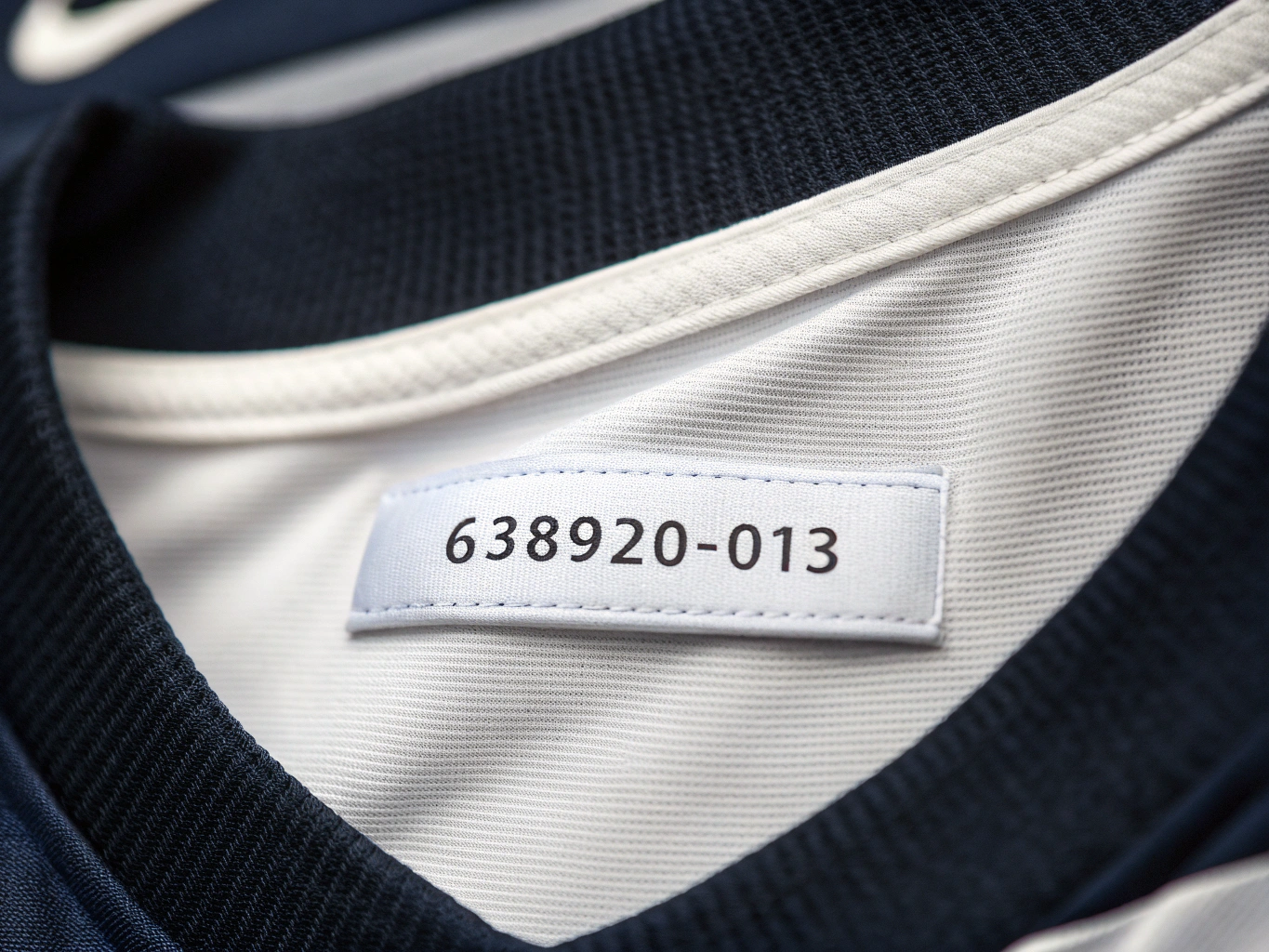
Despite its size, this label contains crucial information:
- Product code (style number)
- Color code
- Production date
- Manufacturing details
Understanding the Product Code
Nike product codes follow a consistent format: a 6-digit style number optionally followed by a 3-digit color code, separated by a hyphen.
Example Nike Product Code
638920-013 638920 Style number 013 Color code (Black) The style number identifies the base design or template. Multiple teams might share the same style number if they use the same template, but the color code will differ.
Fakes Reuse Valid Codes
Counterfeiters often copy real product codes to appear more convincing. For example, the France 2020 Away kit uses code CD0069-100. If you see this code on a different team’s kit, it’s almost certainly fake.
Color Code Reference
Nike uses a systematic approach to color codes. While variations exist, the general pattern is:
| Color Code Range | Primary Color |
|---|---|
| 010-019 | Black |
| 100-109 | White |
| 200-299 | Grey |
| 400-499 | Blue |
| 600-699 | Red |
| 700-799 | Yellow / Gold |
| 800-899 | Orange |
Pro Tip
An orange kit with a color code starting with “1” (white range) is a red flag. Always cross-reference the code with the actual shirt color.
The Production Code
Beyond the product code, Nike includes production timing information. Look for codes like HO150407SYG:
Production Code Breakdown
HO150407SYG HO Holiday (Oct-Dec) 15 Year 2015 04 Start month (April) 07 End month (July) SYG Factory code Nike operates on a four-season cycle:
- SP (or S) — Spring (January to March)
- SU (or U) — Summer (April to June)
- FA (or F) — Fall (July to September)
- HO (or H) — Holiday (October to December)
Important
If a kit claims to be from the 2022/23 season but has a production code from 2018, that’s a major red flag. Fakes often reuse old labels.
Swing Tags
Swing tags are the detachable cardboard tags typically attached to new kits, usually hanging from the sleeve or neck area.
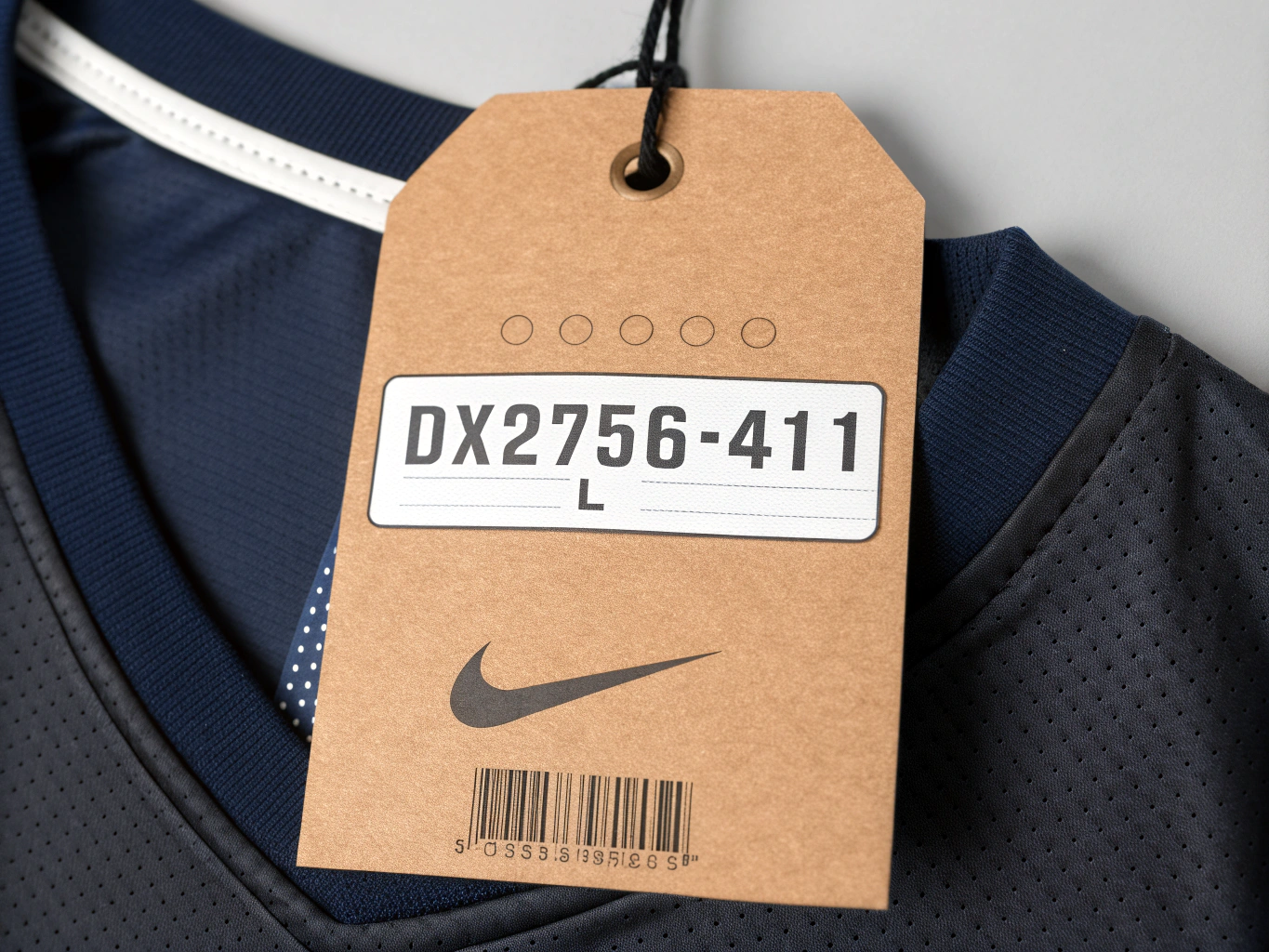
What to Look For
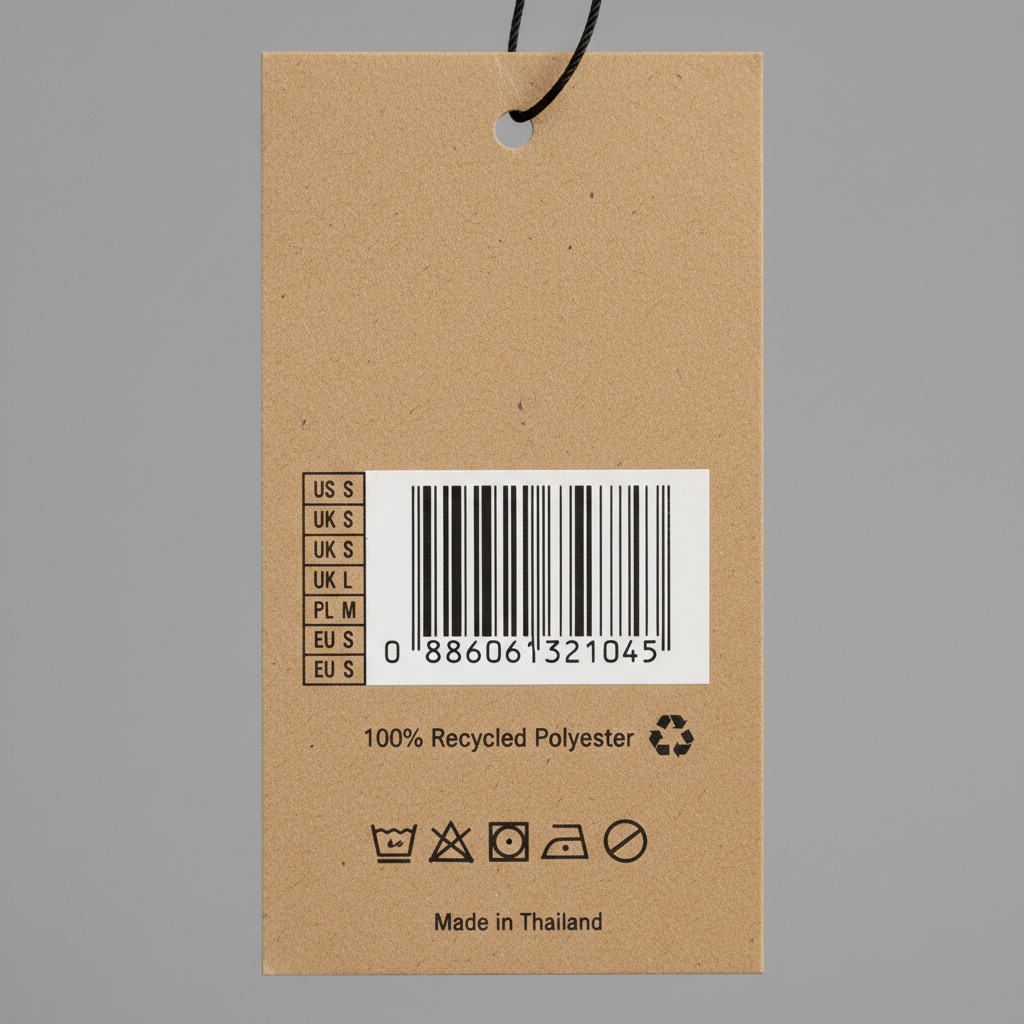
Authentic swing tags include:
- Product code matching the internal label
- Correct sizing and barcode
- High-quality printing (no blurry text)
- Proper cardstock weight
- Authentic Nike branding
Player-Issue Kits
Player-issue versions, marketed as “Match” or “Authentic” editions, often feature different swing tags. Look for gold or silver labels indicating premium tier.
Care Labels
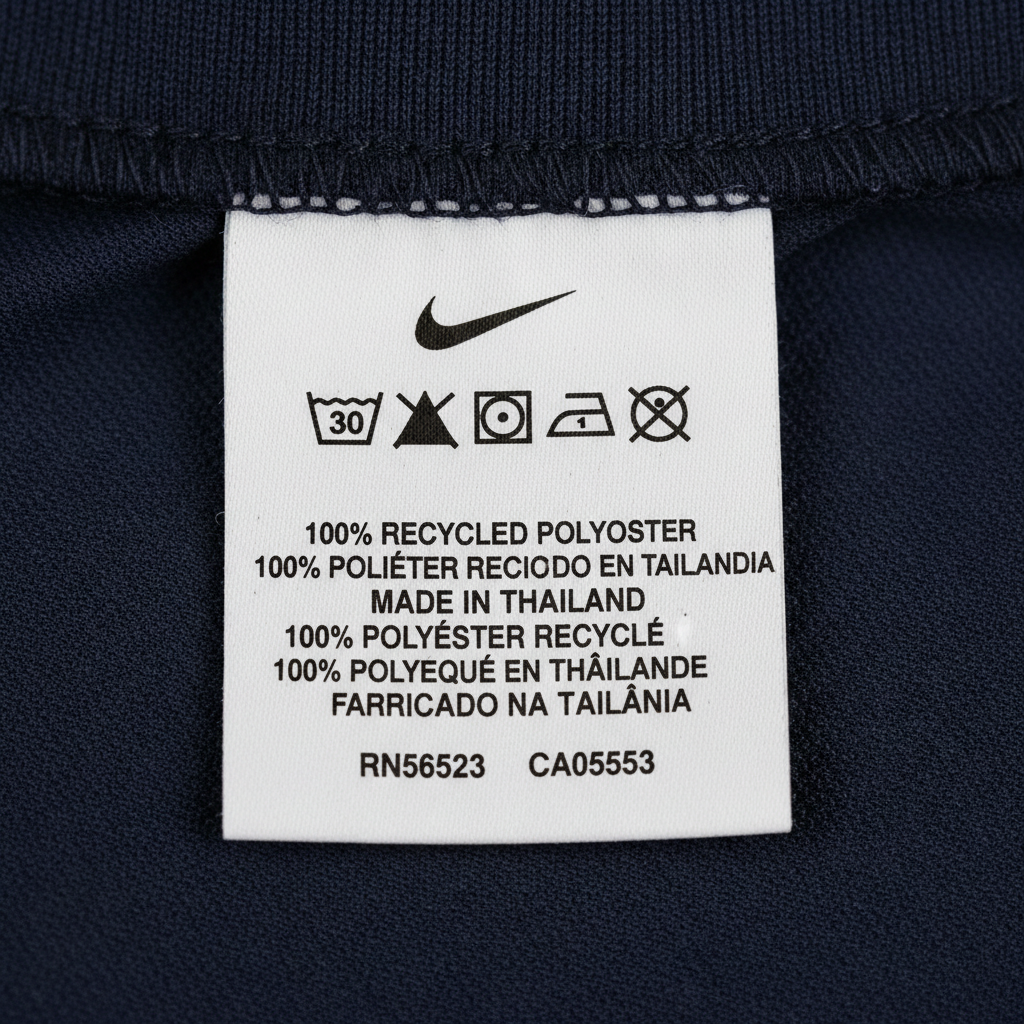
Nike kits include care labels sewn into the inner side seam. On player-spec kits, this information is often printed directly onto the fabric.
Red Flags to Watch
- Typos or grammar issues — Common in counterfeit labels
- Inconsistent country info — The care label should match the neck label
- Poor print quality — Authentic labels have crisp, clear text
- Pen marks on retail versions — Player-spec kits may have marks, retail shouldn’t
Warning
Always compare care label formatting with a known authentic kit from the same season. Nike updates their label designs periodically.
The Neck Label
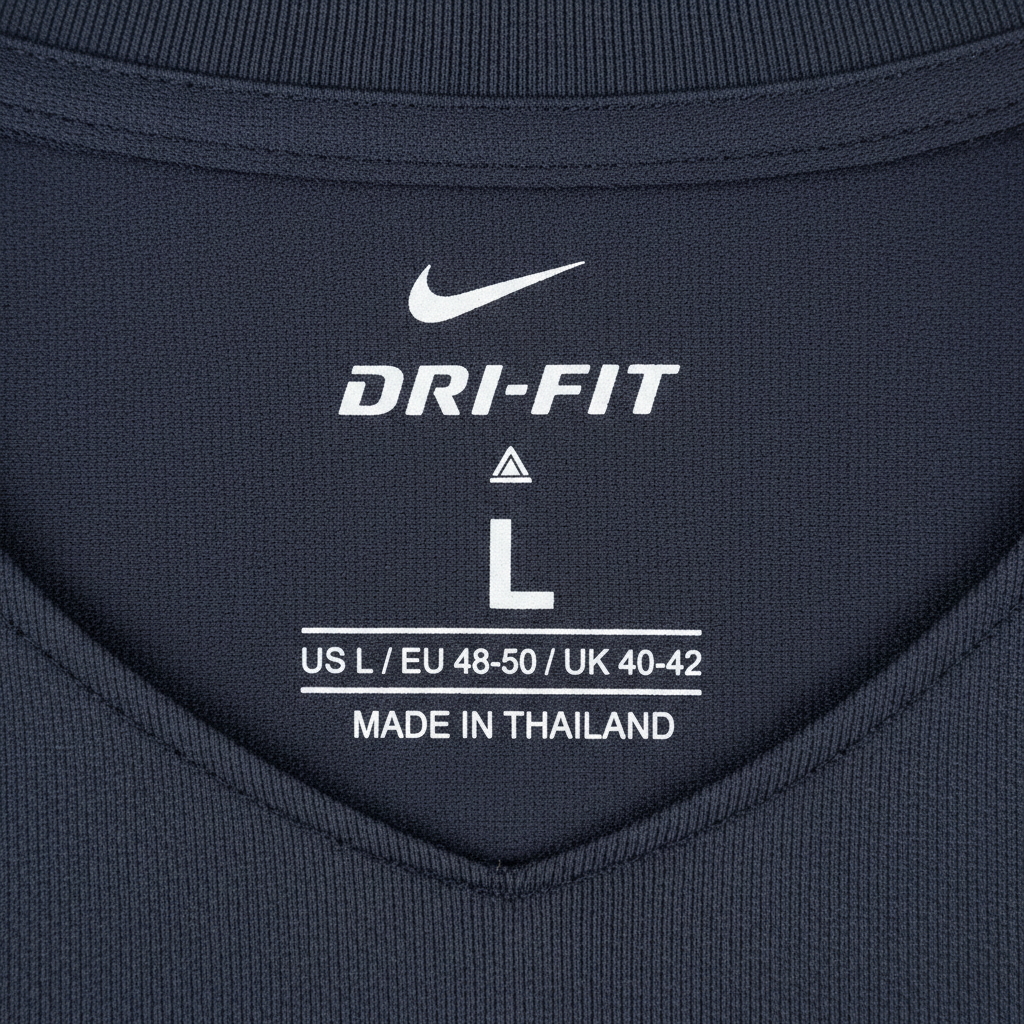
The neck label or size print inside the collar is a key authentication point. It typically features:
- Kit size across regions (US, UK, EU)
- Technology branding (Dri-FIT, Vaporknit, etc.)
- Manufacturing country
Size and Fit Labels
| Label Text | Meaning |
|---|---|
| Dri-FIT | Standard moisture-wicking technology |
| Dri-FIT ADV | Advanced player-spec technology |
| Vaporknit | Elite player-issue material |
| Stadium | Fan/replica version |
| Match | Authentic player-spec version |
Manufacturing Countries
Authentic Nike shirts are made in various countries including:
- Thailand
- Indonesia
- Vietnam
- Cambodia
- El Salvador (especially older kits)
Note
“Made in China” doesn’t automatically mean fake. Nike does produce some legitimate items in China. However, many counterfeits also originate from China, so examine other details carefully.
Security Tags
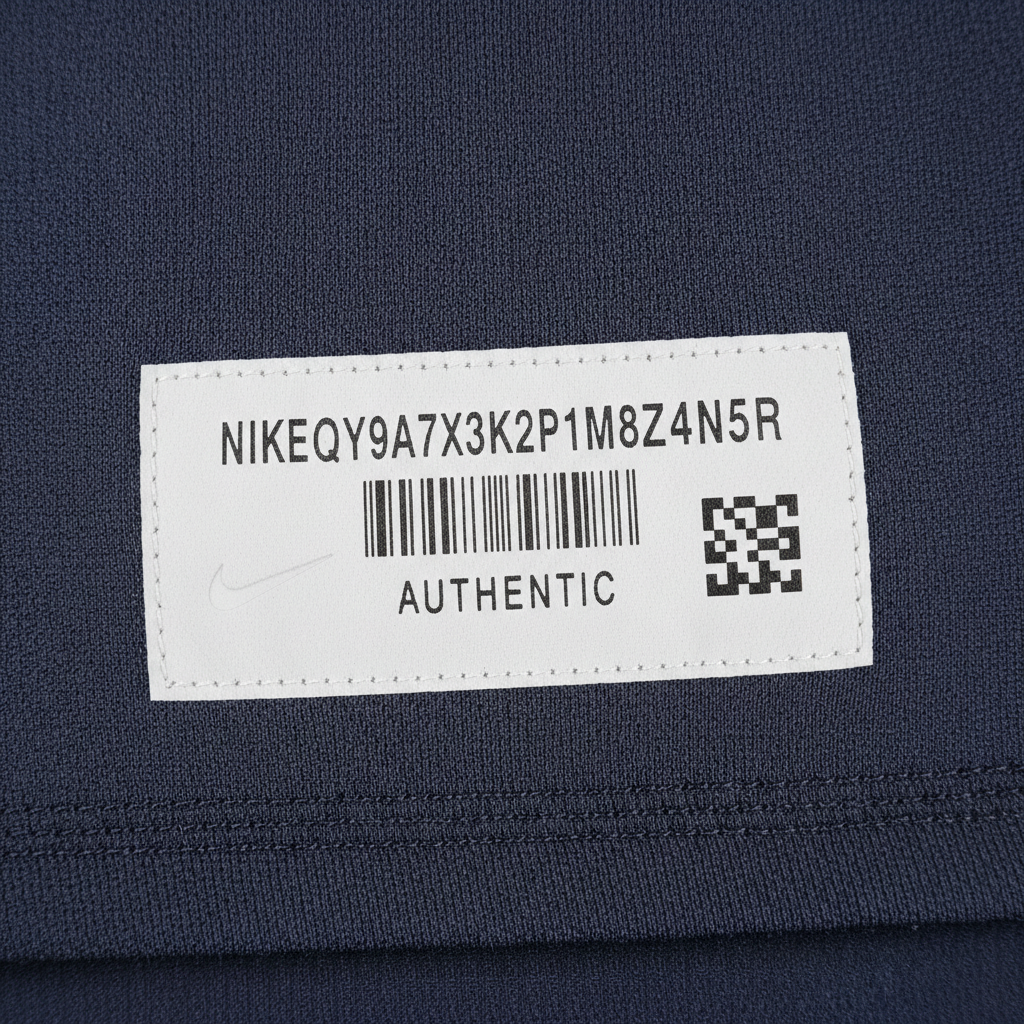
Most modern Nike kits feature a security tag (authenticity tag) at the bottom right of the shirt.
Key Features
- Long alphanumeric code — Unique to each garment
- Barcode — Scannable for inventory purposes
- Consistent placement — Usually bottom right front
- Quality printing — Clear, not smudged
Pro Tip
While security tags can be replicated, the code itself should be unique. If you find the same code on multiple listings, one or more are likely fake.
Evolution Timeline
| Era | Security Tag Style |
|---|---|
| Pre-2010 | No security tag |
| 2010-2015 | Small printed code |
| 2015-2020 | Larger tag with barcode |
| 2020+ | Enhanced design with QR elements |
Logos, Crests, and Stitching
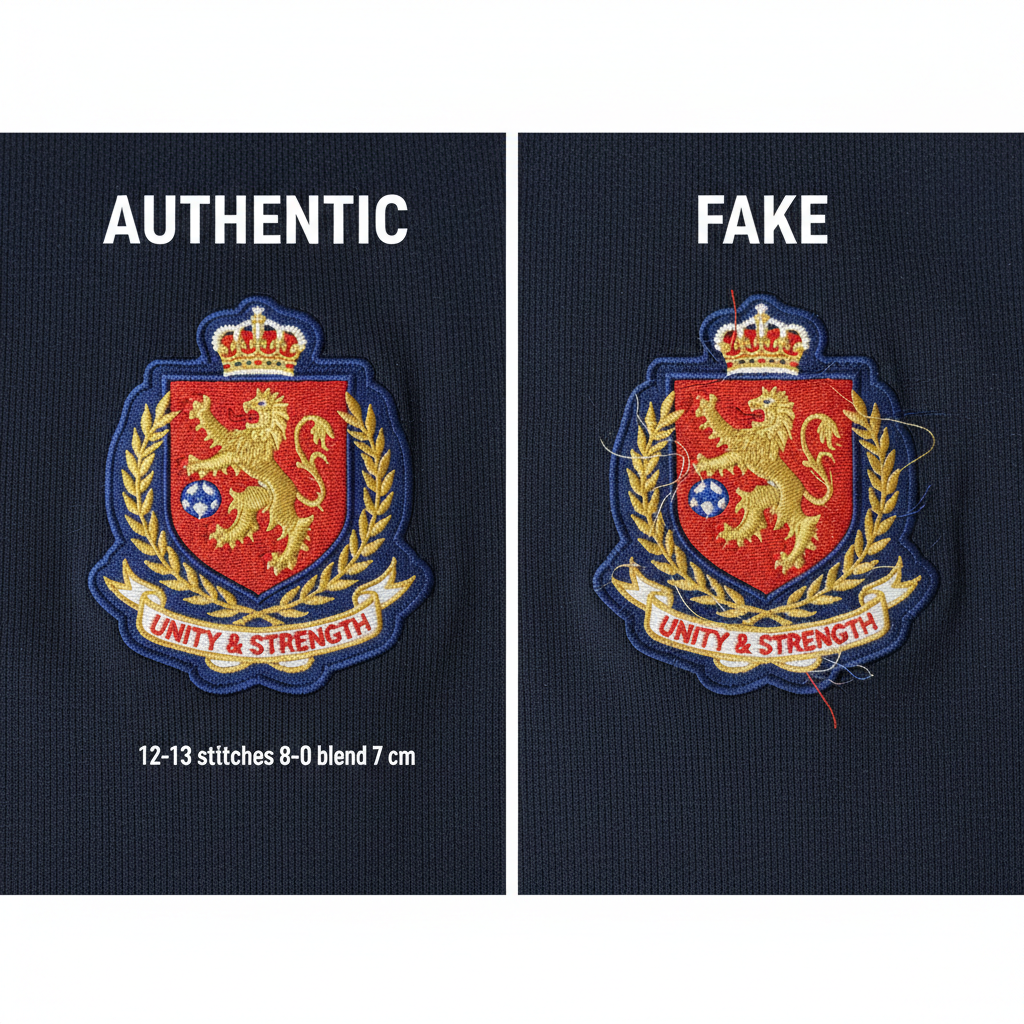
The club crest and Nike Swoosh are often where fakes fail most visibly.
The Nike Swoosh
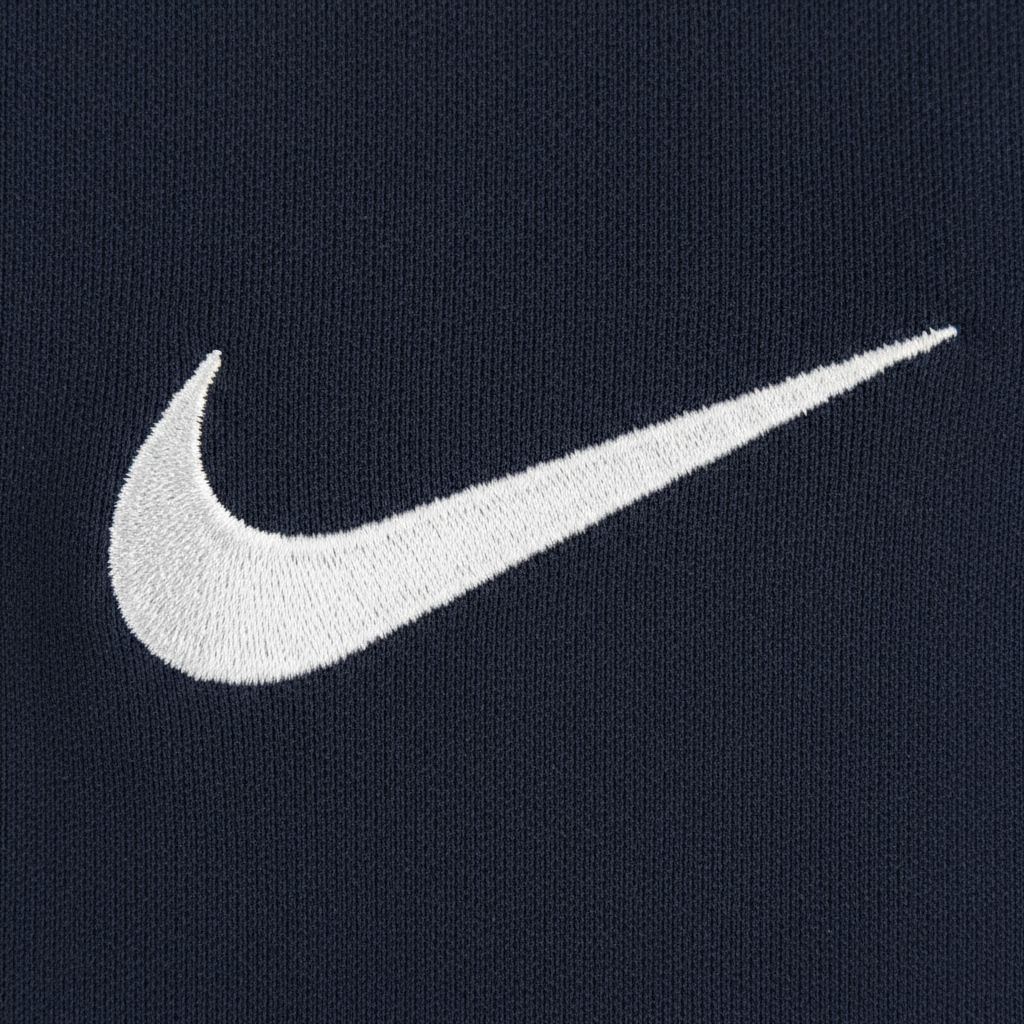
Authentic Swoosh characteristics:
- Clean, consistent stitching
- Proper proportions
- No loose threads
- Correct placement
Common Red Flags
- Uneven stitching — Authentic embroidery is consistent
- Wrong thread thickness — Fakes often use thicker thread
- Color bleeding — Adjacent colors should stay separate
- Missing details — Small elements may be simplified on fakes
- Incorrect positioning — Measured against authentic examples
Example
On some club crests, the stitching density on authentic kits is around 12-13 stitches per centimeter. Fakes typically have lower density (8-10 stitches/cm).
RN56323 and CA05553
You’ll often see these codes on Nike product labels. Many collectors wonder what they mean.
What They Are
- RN56323 — Nike’s Registered Number with the U.S. Federal Trade Commission
- CA05553 — Nike’s identification number for Canadian imports
Note
These codes are NOT product-specific. Every Nike product globally uses these same identification numbers. They confirm the item is manufactured by Nike Inc.
Important Context
The presence of RN56323 or CA05553 does NOT guarantee authenticity. Counterfeiters commonly replicate these codes because they’re publicly known and consistent across all Nike products.
Use these codes as one data point among many, not as definitive proof of authenticity.
Quick Authentication Checklist
Use this checklist when examining any Nike football kit:
| Check | Status |
|---|---|
| Product code format (XXXXXX-XXX) | ☐ |
| Color code matches actual shirt color | ☐ |
| Production date aligns with season | ☐ |
| Swing tag matches internal label (if present) | ☐ |
| Care label has no typos | ☐ |
| Manufacturing country consistent across labels | ☐ |
| Security tag present and properly printed | ☐ |
| Stitching quality on crest and Swoosh | ☐ |
| Proper fabric feel and weight | ☐ |
| Overall build quality | ☐ |
No Single Test Is Definitive
Always use multiple authentication methods together. A fake might pass one or two checks but will usually fail across several criteria.
Need Help Verifying a Code?
Found a product code and want to know if it’s legitimate? Use our product code database to instantly check if a code matches a known authentic kit.
Our database includes thousands of verified Nike product codes from kits spanning multiple decades.
Frequently Asked Questions
What does the Nike product code look like?
Nike product codes follow a XXXXXX-XXX format: 6 digits for the style number, hyphen, then 3 digits for the color code. For example, 638920-013.
Where can I find the product code on a Nike shirt?
The product code is on a small white label, typically located below the main wash care label inside the shirt, often near the hem or side seam.
What do HO, FA, SU, and SP mean on Nike labels?
These are Nike's season codes: HO = Holiday (Oct-Dec), FA = Fall (July-Sept), SU = Summer (April-June), SP = Spring (Jan-March). They indicate when the item was produced.
Does 'Made in China' mean my Nike shirt is fake?
Not necessarily. Nike does produce some legitimate items in China. However, many counterfeits also come from China, so you should verify other authentication points as well.
What is RN56323 on Nike labels?
RN56323 is Nike's Registered Number with the U.S. Federal Trade Commission. It appears on ALL Nike products and is NOT unique to individual items, so it doesn't prove authenticity.
How can I tell if a Nike jock tag is real?
Authentic jock tags have a long unique alphanumeric code, clear printing, and consistent placement (usually bottom right). If you find the same code on multiple listings, at least one is fake.
Related Guides
Ready to verify a product code?
Use our database to instantly check if a product code matches an authentic kit.