How to Authenticate Puma Football Kits
Complete guide to verifying authentic Puma football shirts. Learn to decode product codes, understand factory codes, and authenticate any Puma kit.
Table of Contents
Puma sponsors major clubs like Manchester City, AC Milan, and Borussia Dortmund. Their kits are popular among collectors, which unfortunately makes them targets for counterfeiters.
This guide covers everything you need to authenticate Puma football kits.
The Product Code Label
Puma product codes are found on a large label typically sewn into the left side of the shirt. It’s labeled as either “Style No” or “Article No.”
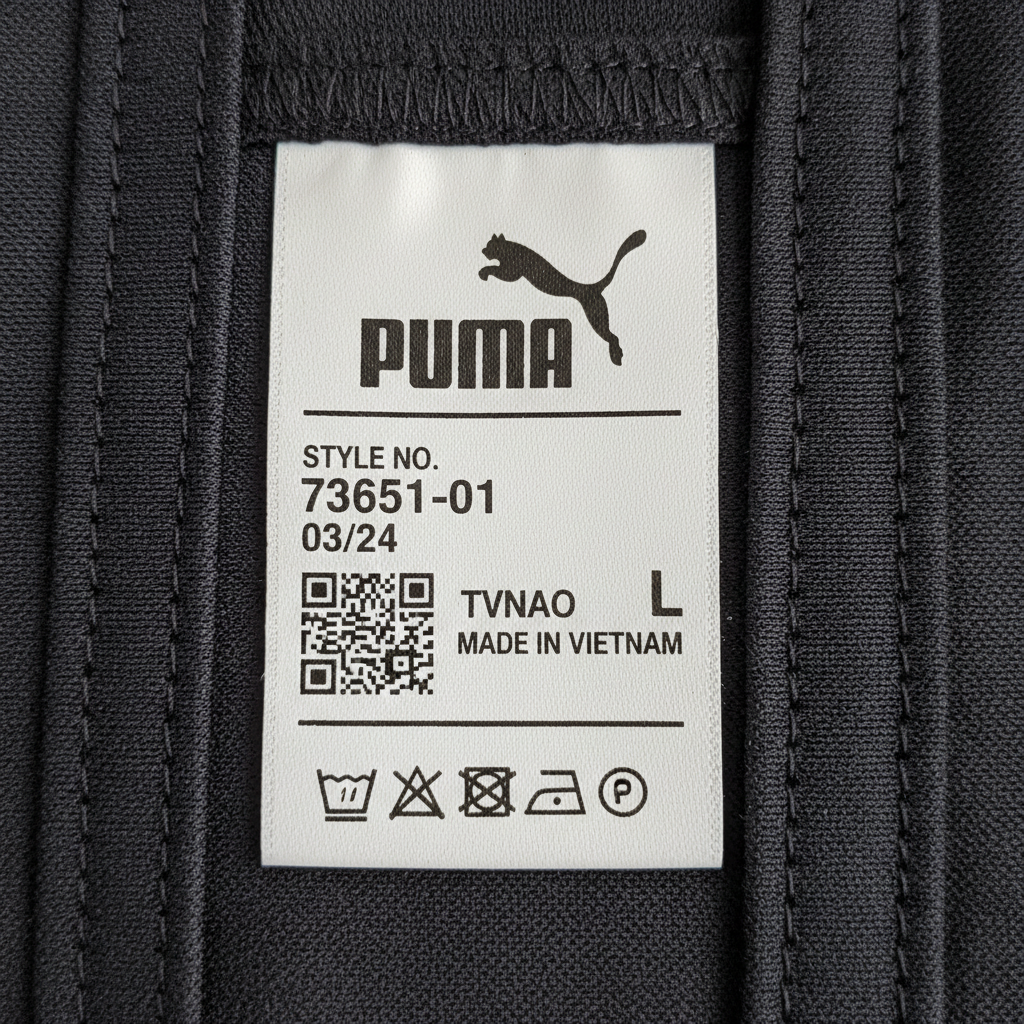
Note
This labeling system was introduced around 2000. Pre-2000 vintage Puma kits may not have a product code label.
Understanding the Product Code
Puma product codes are typically 6-digit numeric strings, often followed by a 2-digit variant code.
Example Puma Product Code
736251-01 736251 Style number 01 Color variant Pro Tip
The 2-digit variant code became consistent on labels from the 2018/19 season onwards. Earlier kits might only show it on swing tags.
Production Date
Modern Puma labels include the actual production date. This is extremely helpful for authentication.
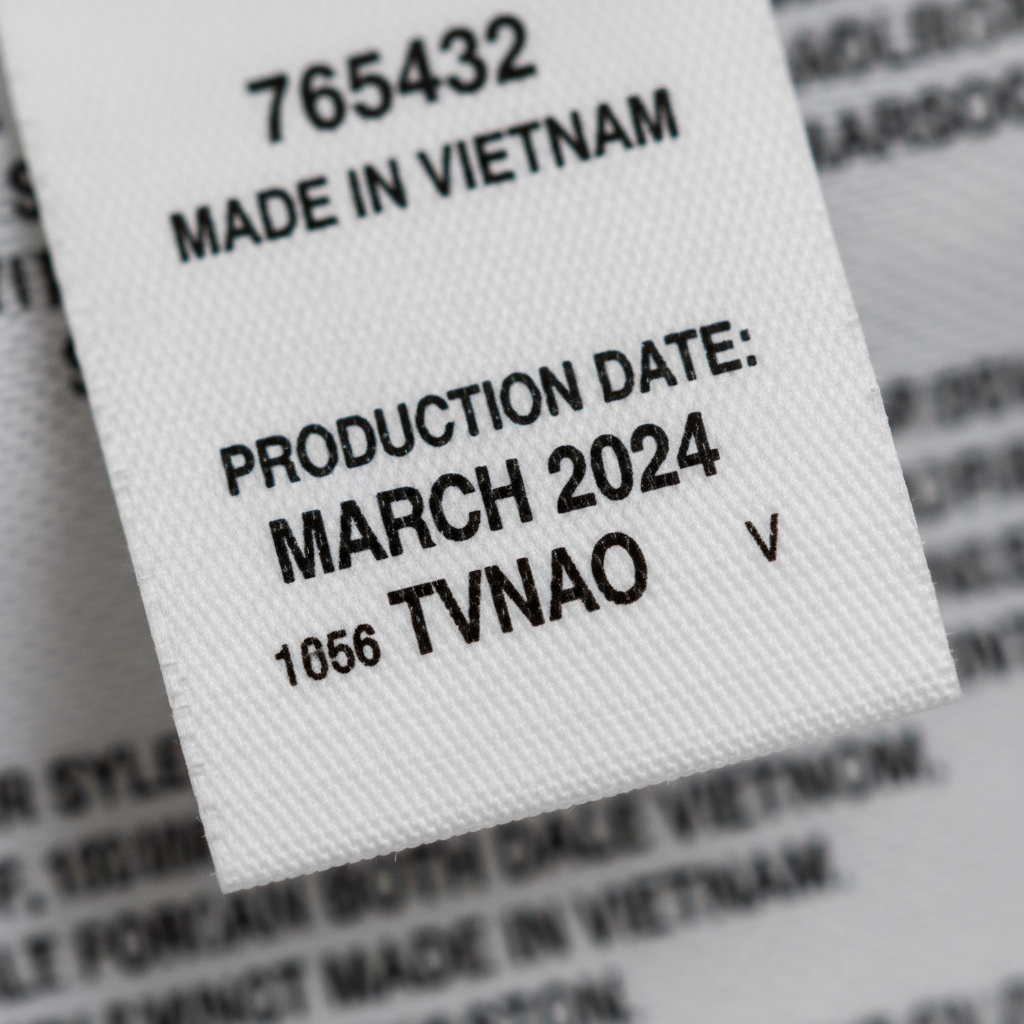
Warning
If the production date doesn’t align with the season (e.g., a 2023/24 kit produced in 2019), it’s almost certainly fake.
Production Region Codes
Puma labels include a code indicating the manufacturing region. For example: TVNAO
Factory Code Breakdown
TVNAO T Type identifier VN Country (Vietnam) AO Factory code The country code should match what’s printed in the “Made in…” section:
- VN = Vietnam
- TH = Thailand
- KH = Cambodia
- ID = Indonesia
Factory Verification
You can cross-reference factory codes with Puma’s published factory lists. For example, “AO” in Vietnam corresponds to Alliance One Apparel Co., Ltd. in Ben Tre Province.
Market Region Codes
Puma labels also show the intended market region. Common codes:
| Code | Region |
|---|---|
| EUR | Europe |
| NAM | North America |
| ASI | Asia-Pacific |
| LAT | Latin America |
This helps identify region-specific releases.
Swing Tags
Puma swing tags contain product information and barcodes.
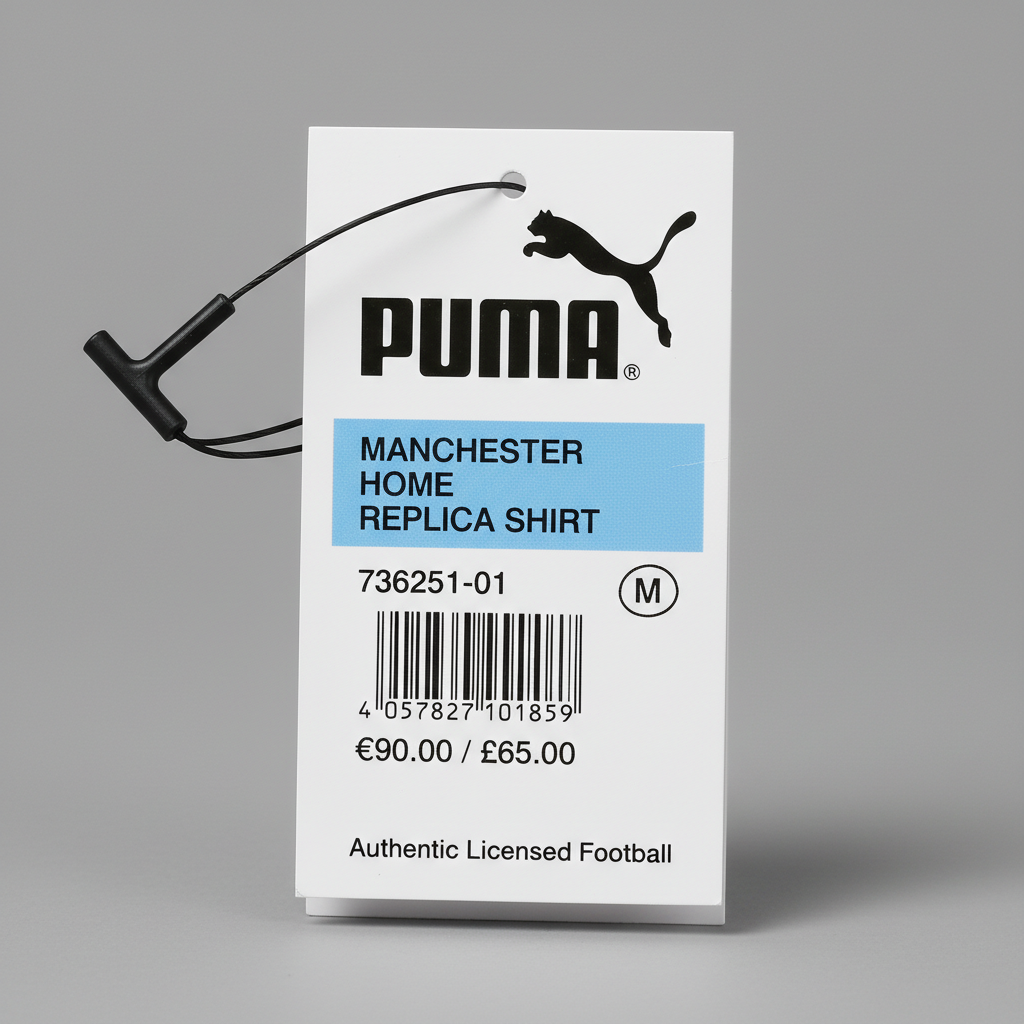
What to Check
- Product code — Must match internal label
- Barcode — Clean and scannable
- Design quality — Sharp printing, proper cardstock
- Holographic elements — Some tags include security features
Design Consistency
Puma updates swing tag designs periodically. Compare against known authentic examples from the same season.
Care Labels
Care labels are sewn into the side seam with washing instructions and manufacturing details.
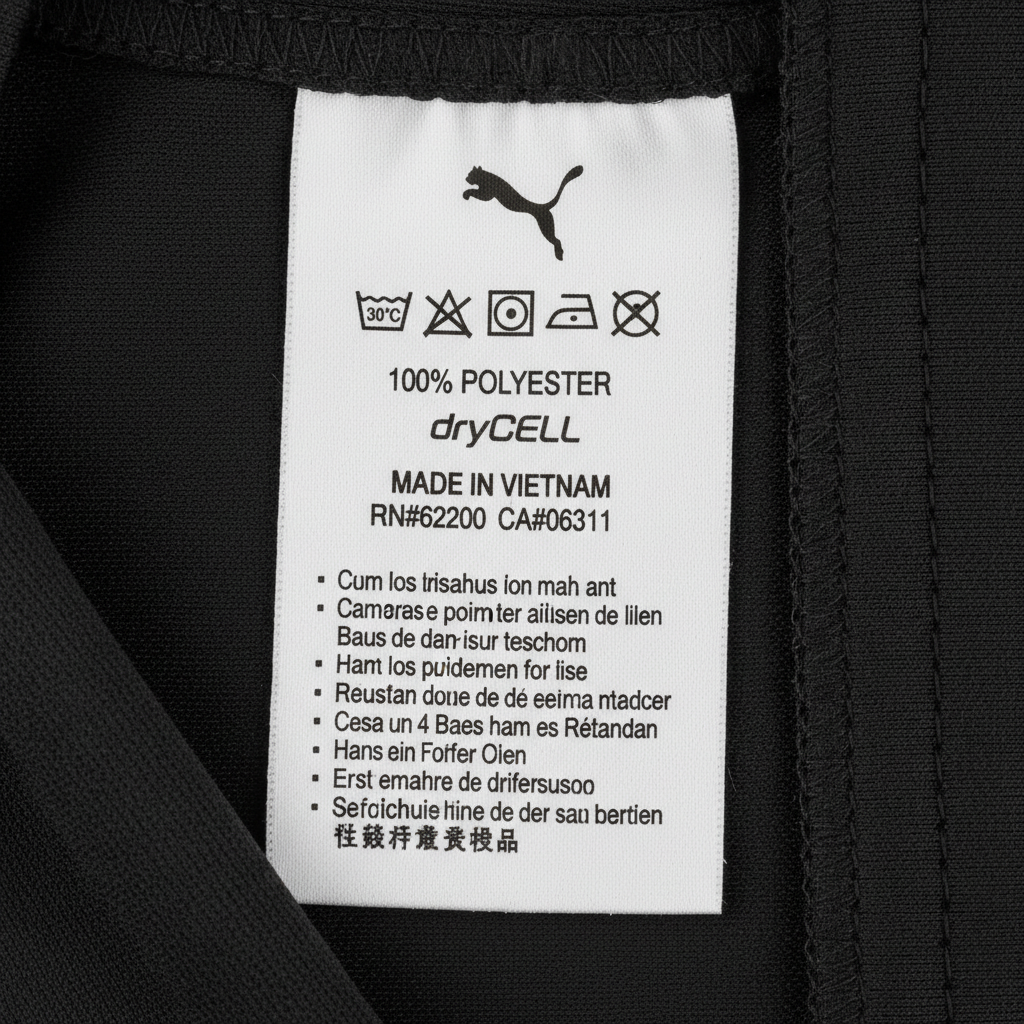
Red Flags
- Spelling mistakes
- Incorrect washing symbols
- Poor print quality
- Inconsistent fonts
The Neck Label
Puma neck labels show size information and technology branding.
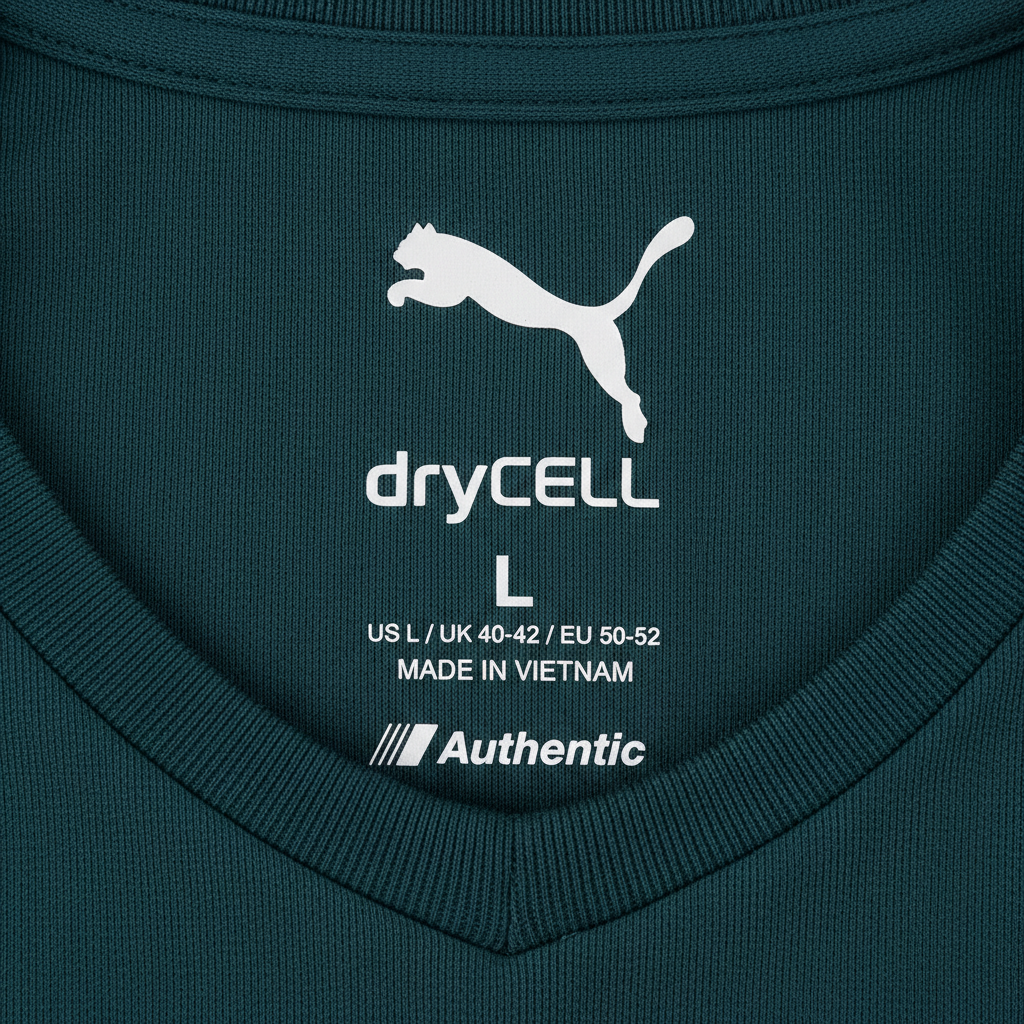
Technology Branding
| Label | Description |
|---|---|
| dryCELL | Standard moisture management |
| ultraweave | Lightweight performance fabric |
| EVOKNIT | Premium knit construction |
| Authentic | Player-spec version |
Security Tags
Modern Puma kits include security features.
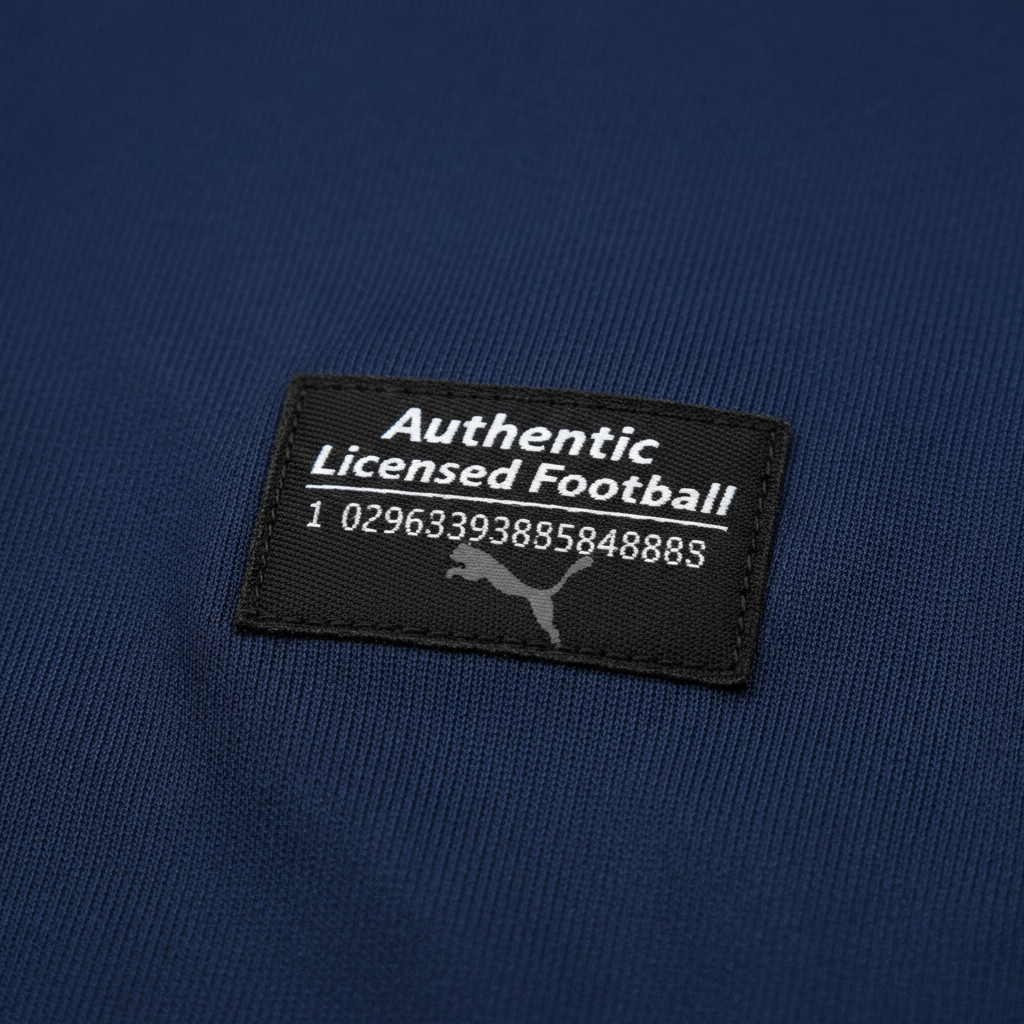
Security measures have evolved over the years, with newer kits having more sophisticated anti-counterfeiting features.
Logos and Crests
The Puma cat logo and club crests are common failure points for counterfeits.
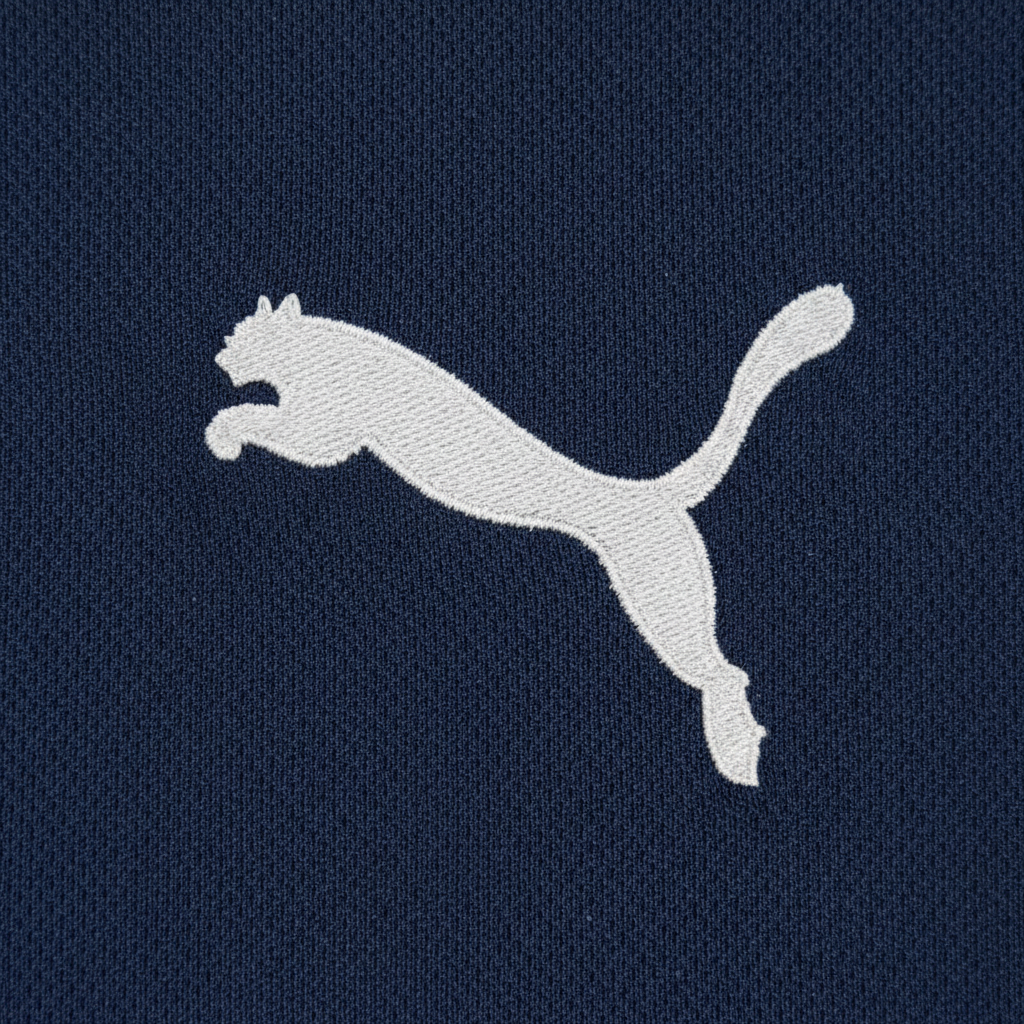
The Puma Logo
Authentic characteristics:
- Clean, fluid shape
- Consistent stitching or heat-press quality
- Accurate proportions
- No visible defects
Club Crests
Check for:
- Sharp detail definition
- Accurate colors
- Even stitching density
- Proper sizing
Example
On high-quality authentic crests, fine details like stars or text remain clearly legible. Fakes often blur or simplify these elements.
RN62200 and CA06311
These regulatory codes appear on Puma labels.
What They Mean
- RN62200 — Puma’s U.S. Federal Trade Commission registration
- CA06311 — Canadian import identification
Important
These are NOT unique to individual products. Every Puma item uses the same codes. Counterfeits commonly replicate them.
Quick Authentication Checklist
| Check | Status |
|---|---|
| Product code format (6 digits + variant) | ☐ |
| Production date aligns with season | ☐ |
| Country code matches “Made in…” | ☐ |
| Swing tag matches internal label | ☐ |
| Care label properly formatted | ☐ |
| Technology branding is correct | ☐ |
| Puma logo quality | ☐ |
| Crest detail and stitching | ☐ |
| Overall build quality | ☐ |
Verify Your Code
Have a Puma product code? Check our database to verify it matches a known authentic kit.
Frequently Asked Questions
What does a Puma product code look like?
Puma product codes are 6-digit numeric strings, often followed by a 2-digit variant code (e.g., 736251-01). The main code is the style number, and the variant indicates color.
How do I decode Puma factory codes like TVNAO?
Factory codes break down as: T = Textile, VN = Country (Vietnam), AO = Factory identifier. The country code should match the 'Made in...' statement on the label.
What do dryCELL and EVOKNIT mean on Puma kits?
dryCELL is Puma's standard moisture management technology. EVOKNIT is a premium knit construction used on player-spec versions. ultraweave indicates lightweight performance fabric.
Where is the Puma product code located?
The product code is on a large label typically sewn into the left side of the shirt, labeled as 'Style No' or 'Article No.'
What is RN62200 on Puma labels?
RN62200 is Puma's U.S. Federal Trade Commission registration number. It appears on ALL Puma products and is NOT unique, so it doesn't prove authenticity.
How can I verify a Puma factory is legitimate?
Puma publishes factory lists that you can cross-reference. For example, factory code 'AO' in Vietnam corresponds to Alliance One Apparel Co., Ltd. in Ben Tre Province.
Related Guides
Ready to verify a product code?
Use our database to instantly check if a product code matches an authentic kit.