How to Authenticate Umbro Football Kits
Complete guide to verifying authentic Umbro football shirts. Focus on vintage kits, diamond logo evolution, and classic Pro Training details.
Table of Contents
Umbro holds a special place in football shirt collecting. As the original supplier to England and countless clubs, vintage Umbro kits are highly sought after—and unfortunately, increasingly counterfeited.
This guide focuses heavily on vintage Umbro authentication (1980s-2000s), an area often overlooked by other resources.
Understanding Umbro Eras
Umbro’s labeling and construction changed significantly over the decades. Understanding these eras is crucial for authentication.
| Era | Characteristics |
|---|---|
| 1970s-1980s | No product codes, emphasis on fabric quality |
| 1990s | Introduction of product labeling, Pro Training era |
| 2000s | Modern labeling similar to Nike/Adidas |
| 2008-2012 | Nike ownership period |
| 2012+ | Iconix ownership, return to heritage focus |
Note
Nike owned Umbro from 2008-2012. Kits from this period may have Nike-style labels and manufacturing standards.
The Diamond Logo Evolution
The Umbro double-diamond logo has evolved significantly. Knowing which logo belongs to which era helps authenticate vintage pieces.
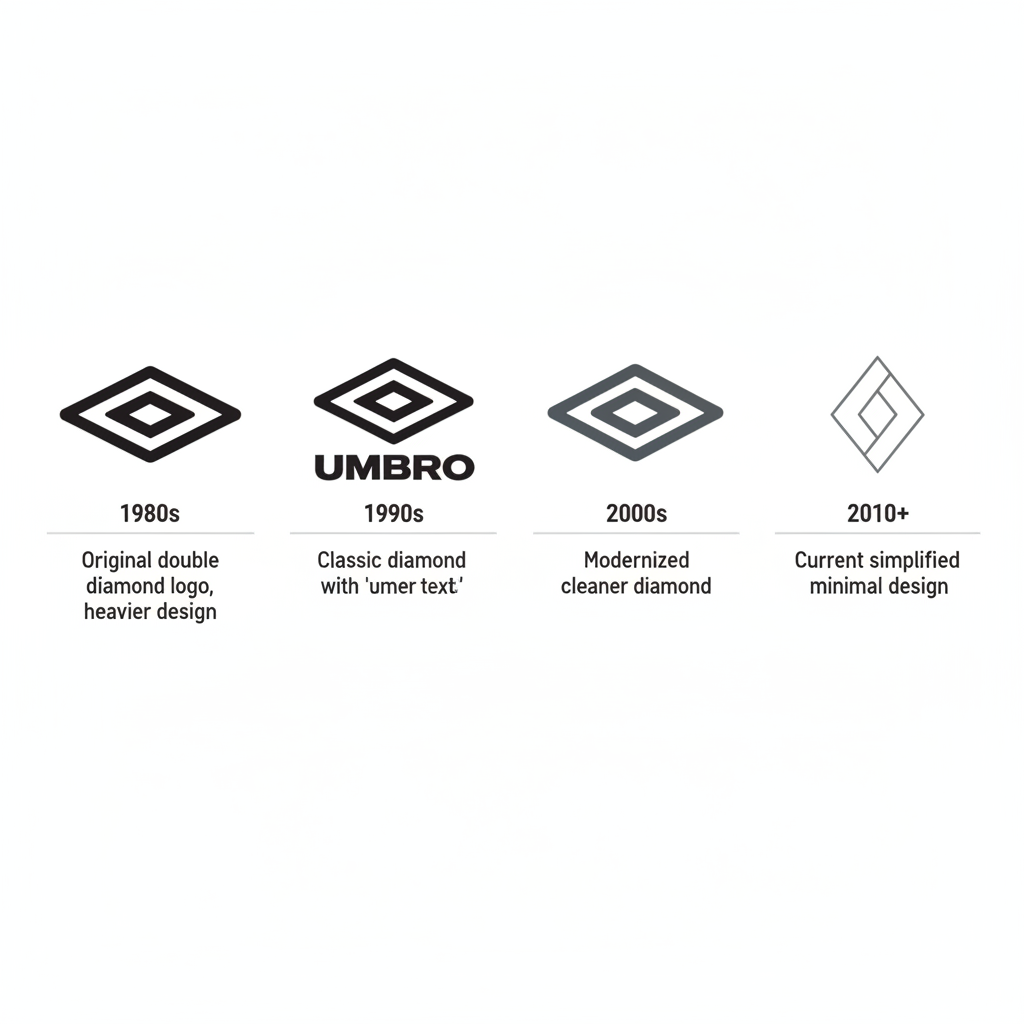
Logo Timeline
| Period | Logo Style |
|---|---|
| 1970s-1980s | Classic interlocking diamonds, often embroidered |
| 1990s | Refined diamonds with cleaner lines |
| 2000s | Modern simplified version |
| 2008-2012 | Nike-era minimalist design |
| 2012+ | Return to heritage double-diamond |
Era Mismatch = Red Flag
A 1996 England shirt with a 2015-style logo is obviously fake. Always match the logo style to the kit’s claimed year.
Vintage Labels (Pre-2000)
Authenticating vintage Umbro is more challenging because labels were less standardized.
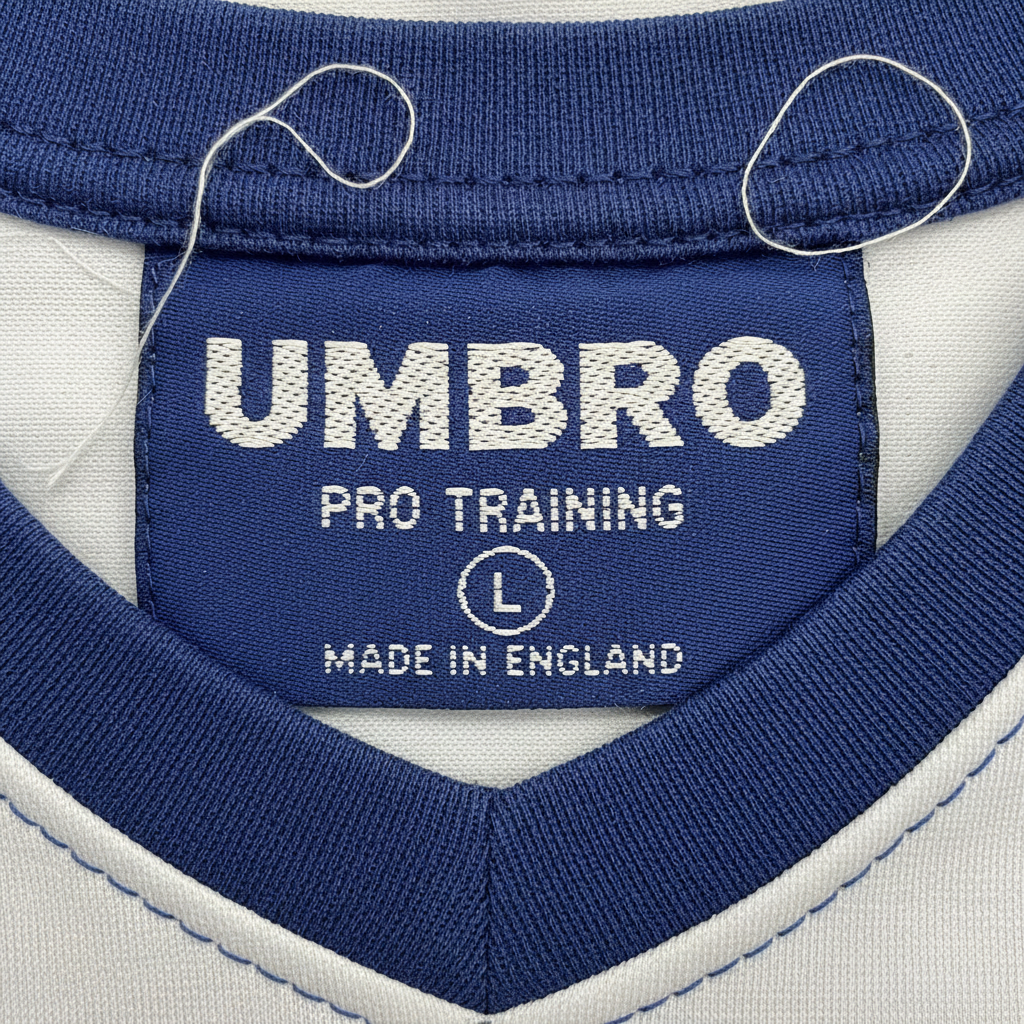
Pro Training Era (1990s)
The “Pro Training” designation was Umbro’s premium player-spec line in the 1990s. Key features:
- Heavy cotton/polyester blend
- Embroidered badges (not heat-pressed)
- Thick, substantial feel
- Made in England/Portugal labels (common for this era)
England 1996 Euro Kit
The iconic England 1996 Home shirt in Pro Training spec features embroidered Three Lions crest, substantial cotton-blend fabric, and “Made in England” labeling.
What to Look For
Authentic vintage labels typically show:
- Size information
- Fabric composition
- Country of manufacture
- Care instructions
🔍 The Dots Test: Critical for 1990s Authentication
Authentic 1990s Umbro neck labels have tiny dots within the letters of “UMBRO”. This is one of the most reliable authentication methods for vintage pieces.
Authentic label: Clear, distinct dots visible in the UMBRO lettering Fake label: Flat, smooth letters with no dots, less detailed stitching
This detail is extremely difficult for counterfeiters to replicate. If a supposedly 1990s label has no dots in the UMBRO text, it’s almost certainly fake.
Vintage red flags:
- Modern fonts on supposedly period pieces
- Incorrect fabric compositions for the era
- Wrong manufacturing countries
- Missing dots in UMBRO lettering (1990s labels)
Modern Product Codes (2000+)
Modern Umbro kits use product code systems similar to other major brands.
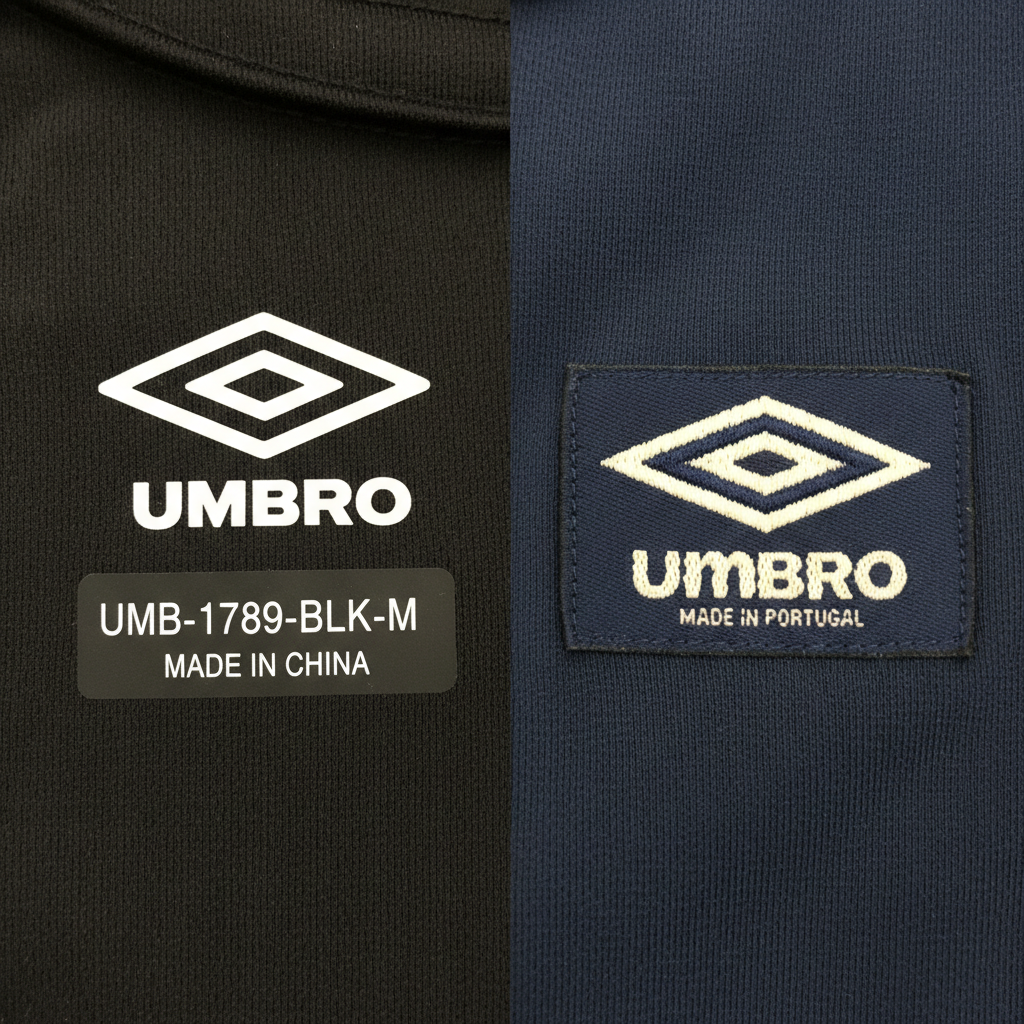
Code Format
Modern Umbro codes typically follow a pattern of letters and numbers:
Example Umbro Product Code
UUM0123 UUM Umbro prefix 0123 Product identifier Pro Tip
Nike-era Umbro kits (2008-2012) may use Nike-style coding systems. This is authentic for that period.
Fabric and Construction
Umbro kits, especially vintage ones, are known for distinctive fabric quality.
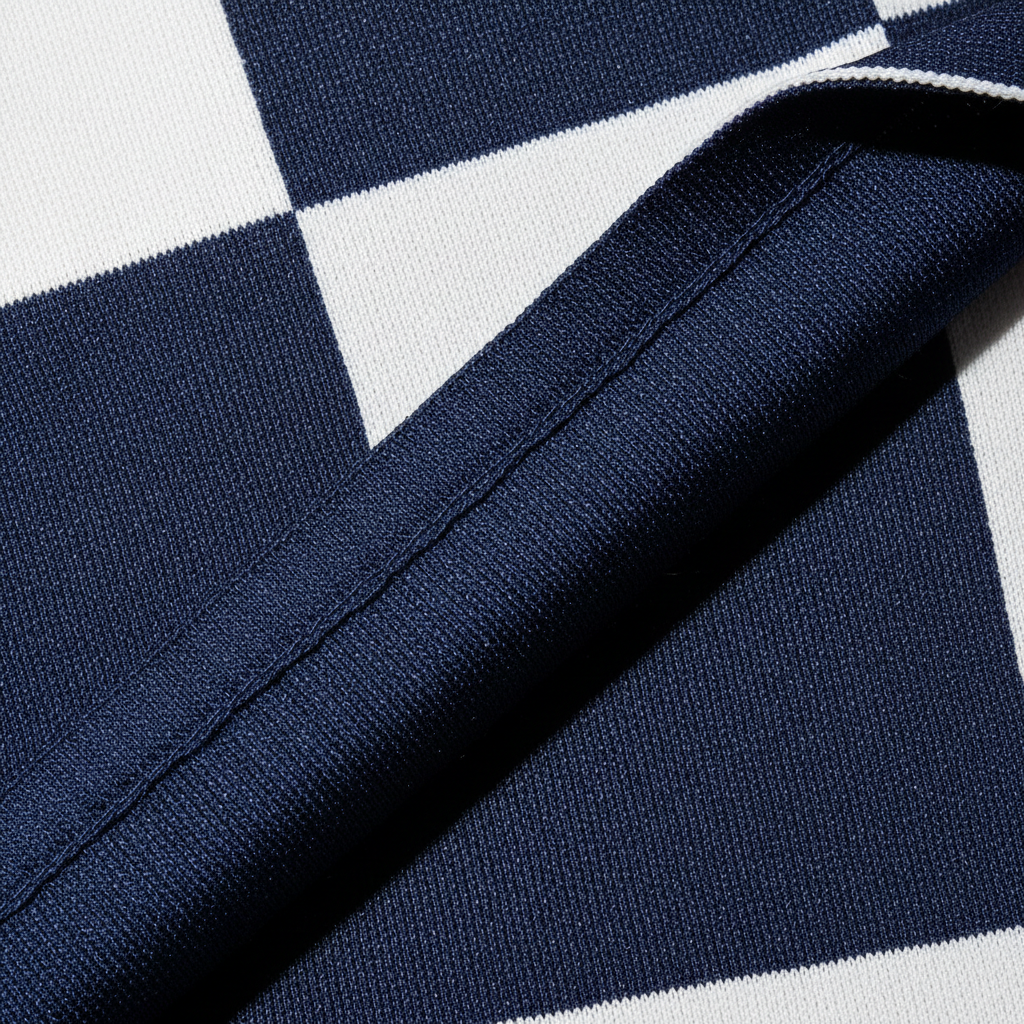
Era-Specific Fabrics
| Era | Typical Fabric |
|---|---|
| 1980s | Heavy cotton or cotton/poly blend |
| 1990s | Medium-weight cotton/polyester |
| 2000s | Lightweight polyester |
| 2010s+ | Modern performance synthetics |
Pro Training vs Replica
Pro Training (Player Spec):
- Heavier weight
- Better fabric quality
- Embroidered details
- More limited production
Replica (Fan Version):
- Lighter weight
- Screen-printed elements
- Mass produced
- More affordable
Important
Vintage Pro Training kits command significantly higher prices. Ensure you’re not paying Pro Training prices for a replica.
Crest and Badge Details
The England Three Lions crest and club badges on Umbro kits are key authentication points.
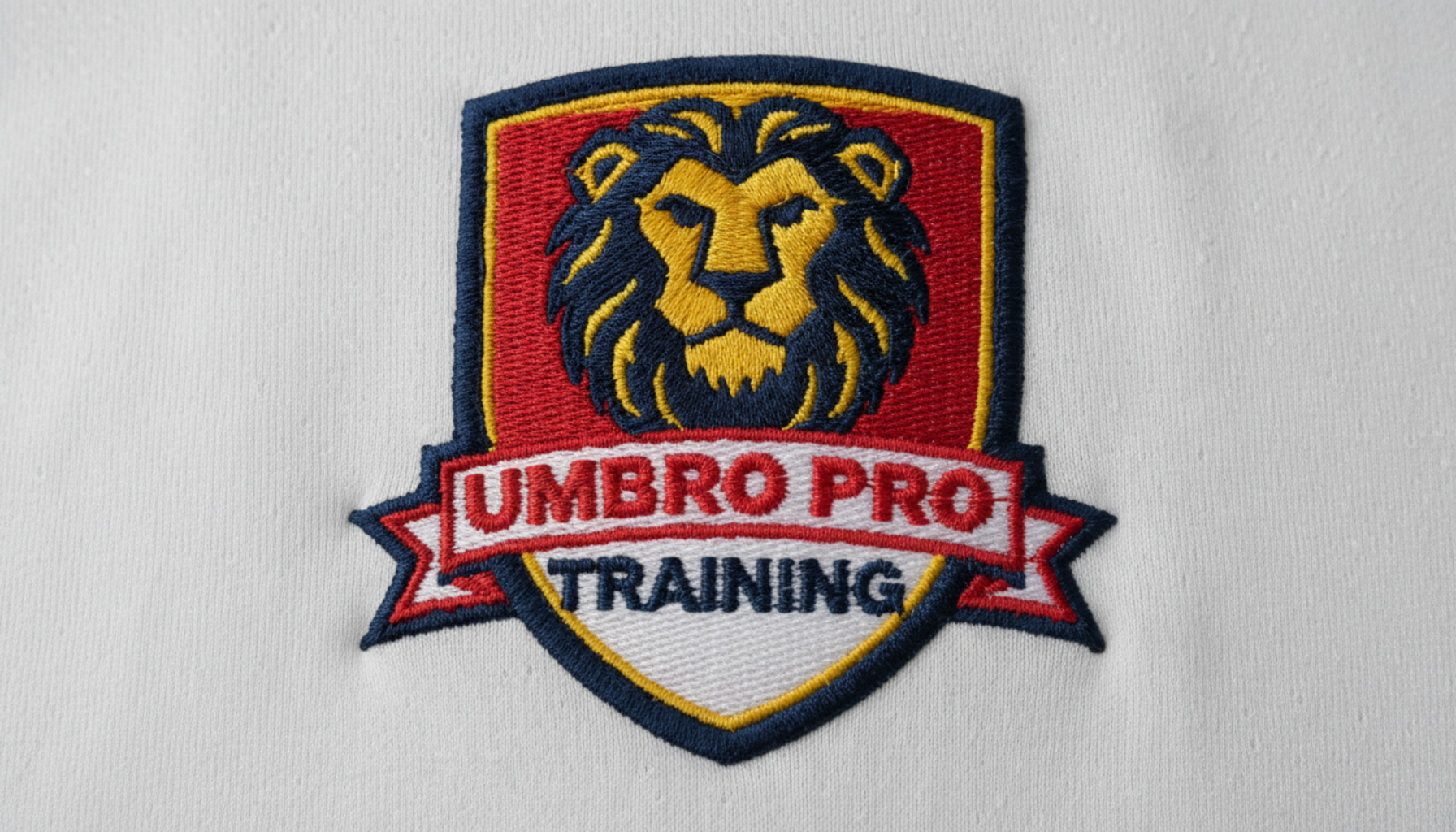
Embroidery vs Heat-Press
| Feature | Embroidered | Heat-Pressed |
|---|---|---|
| Feel | Raised, textured | Flat, smooth |
| Durability | Very durable | Can crack/peel |
| Era | Vintage, premium | Modern, replicas |
| Value | Higher | Lower |
What to Check
- Stitch density — Authentic embroidery is tight and consistent
- Color accuracy — Compare to reference images
- Placement — Should align with authentic examples
- Backing — Properly finished on the inside
Care Labels and Tags
Care labels provide manufacturing information crucial for authentication.
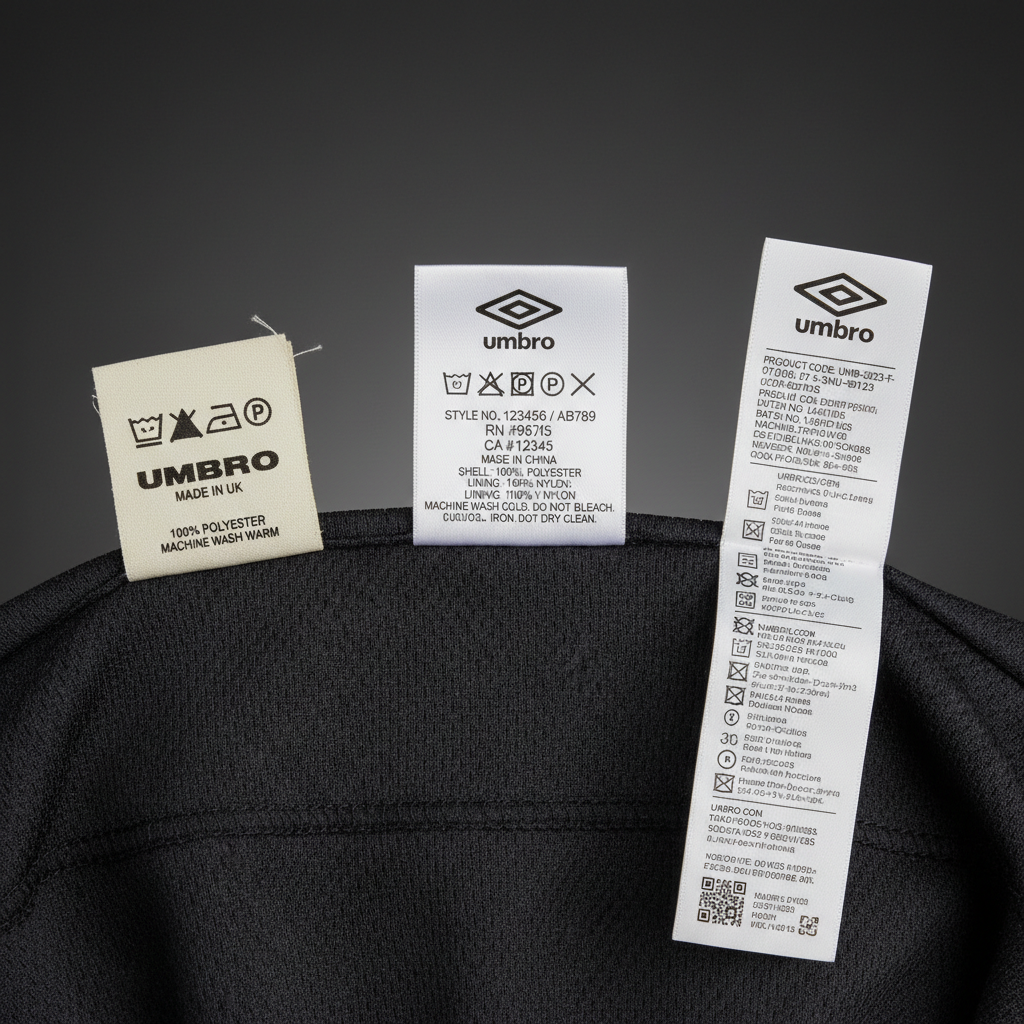
Manufacturing Countries by Era
| Era | Common Countries |
|---|---|
| 1980s-Early 1990s | England, Scotland, Portugal |
| Mid-1990s | Portugal, Morocco |
| 2000s | China, Indonesia, Thailand |
| 2010s+ | Thailand, Vietnam, China |
Warning
An “England 1990 World Cup” shirt with a “Made in China” label is almost certainly a reproduction or fake. China manufacturing became common only in the 2000s.
Swing Tags
Original swing tags add authenticity and value, especially for vintage pieces.
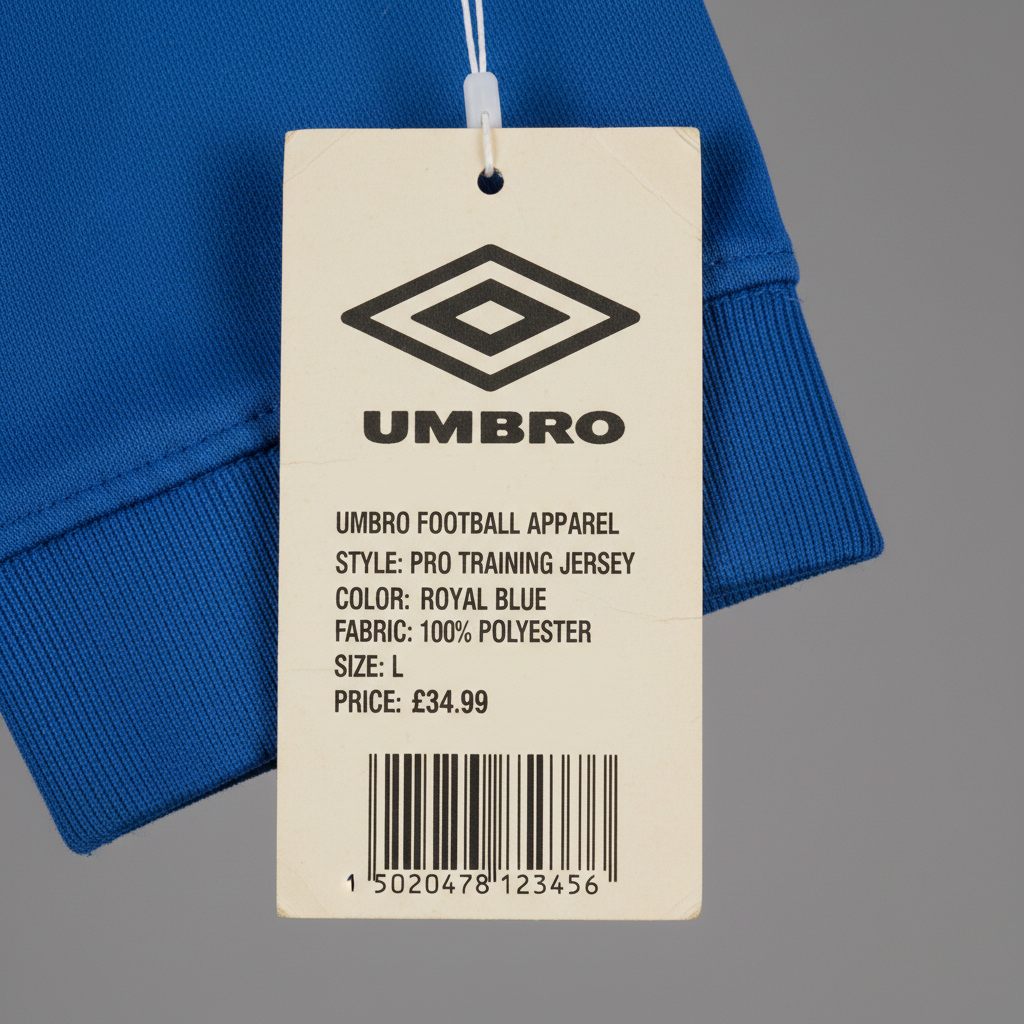
Vintage vs Modern
Vintage tags (1990s):
- Simpler designs
- Period-appropriate branding
- Different attachment methods
Modern tags:
- More detailed information
- Barcodes
- Security features
Quick Authentication Checklist
| Check | Status |
|---|---|
| Logo matches claimed era | ☐ |
| Label style appropriate for period | ☐ |
| Fabric weight and composition correct | ☐ |
| Manufacturing country era-appropriate | ☐ |
| Embroidery/print method matches spec | ☐ |
| Crest details are accurate | ☐ |
| Care label formatting correct | ☐ |
| Swing tag (if present) matches era | ☐ |
| Overall construction quality | ☐ |
Vintage Authentication Tips
For pre-2000 Umbro kits, fabric feel and construction quality are often more reliable than labels. Authentic vintage pieces have a distinctive weight and hand-feel that reproductions rarely match.
Verify Your Code
Have an Umbro product code from a modern kit? Check our database to verify it matches a known authentic shirt.
Frequently Asked Questions
How do I authenticate a 1990s Umbro shirt?
Check for dots within the 'UMBRO' lettering on neck labels (fakes have flat letters), verify era-appropriate country of manufacture (England/Portugal for 90s), and assess fabric weight and quality.
What is the 'Dots Test' for Umbro authentication?
Authentic 1990s Umbro neck labels have tiny dots within the letters of 'UMBRO'. Fake labels have flat, smooth letters with no dots and less detailed stitching.
What's the difference between Pro Training and Replica Umbro kits?
Pro Training (player-spec) kits have heavier weight, embroidered badges, and better fabric quality. Replicas are lighter with screen-printed elements. Pro Training commands higher prices.
When did Nike own Umbro?
Nike owned Umbro from 2008-2012. Kits from this period may have Nike-style labels and manufacturing standards. This is authentic for that era.
Which countries manufactured authentic Umbro kits in the 1990s?
1980s-Early 1990s: England, Scotland, Portugal. Mid-1990s: Portugal, Morocco. A 1990 World Cup shirt with 'Made in China' is almost certainly fake.
Do vintage Umbro kits have product codes?
Pre-2000 vintage Umbro kits may not have product codes. For these, focus on logo style, fabric quality, era-appropriate labels, and construction quality instead.
Related Guides
Ready to verify a product code?
Use our database to instantly check if a product code matches an authentic kit.